
All We Imagine as Light (Kapadia, 2024)
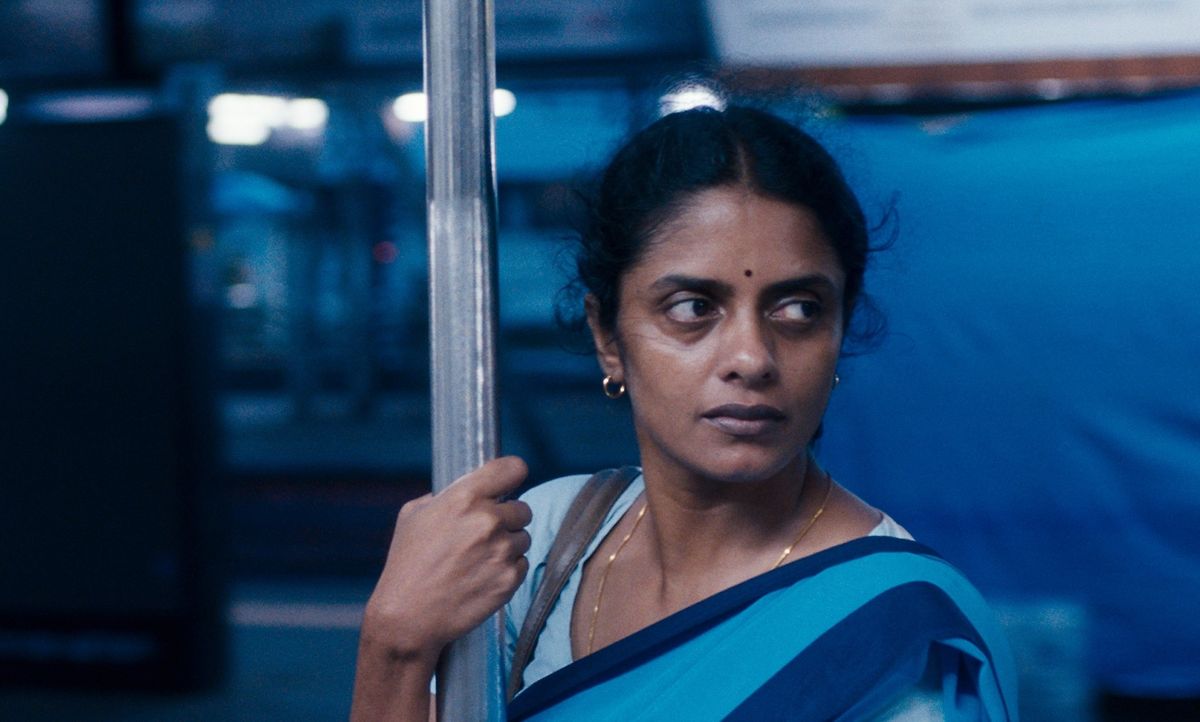
I saw a social media comment the other day from a critic saying they had just watched All We Imagine as Light for the third time and I thought, Yes! Why aren’t we still talking about this film?
Possibly because the Indian authorities decided not to advance its claims for a Best International Film Oscar, it seems to have just faded out of the discourse. Also, five months on from being released in cinemas (at one of the most competitive times of year), it’s not that easy to see.
I reviewed it for RNZ during my At the Summer Movies stint back in January:
In All We Imagine as Light, two Malayalam nurses are flatting together in a tiny apartment in modern day Mumbai. One day a box arrives unexpectedly on their doorstep, addressed to the older one, Prabha (played by Kani Kusruti). It’s a flash rice cooker and it has been sent direct from an online retailer, so the benefactor isn’t obvious.
Prabha knows, however, that a German appliance like this has probably come from her husband, who is working there but who hasn’t been in contact with her since their arranged marriage a year ago. The presence of this machine is upsetting to the usually calm and self-possessed senior nurse. Does it mean that he is coming back? Or is going to call for her? Or is it a farewell gift, a kind of apology for an arrangement that hasn’t worked out.
Prabha is still young and has a suitor – a doctor at the hospital where she works – but she takes her vows seriously and considers herself to be a married woman. Where does all this leave her?
Meanwhile, her younger flatmate Añu (played by Divya Prabha) is in a secret relationship with a young Muslim man (played by Hridhu Haroon). She is in the full bloom of young romance but it’s unclear what sort of future there is in either of their communities for a relationship like that.
And there is a third woman, older Parvaty (Chhaya Kadam), who is a cook at the hospital but who is being threatened with eviction from her tenement flat after the death of her husband.
These are women whose stories are rarely told on screen at all, let alone with such grace and such tenderness. Mumbai has a population of over 12 million people and there’s a ruthlessness about life there. Prabha, Añu, Pravaty and their friends do their best to maintain a social and professional community but it’s only when they leave the city for Pravaty’s home village, over 350km away, that they truly become themselves.
Just before I go, I want to acknowledge a couple of comments on yesterday’s newsletter. Thanks to reader HG of Wellington who saw the Marlon Williams documentary over the weekend:
Fantastic insight into what I see as a bit of a tortured genius who is still looking to find himself.
And reader CP of Auckland asked “Also, did you like Thunderbolts*?” which. looking back at my review, is a fair question!
I did like Thunderbolts* and I think I like it more from the distance of a few days.
The editor-in-chief and I talked about it over breakfast this morning, specifically the fact that the big battle takes place on Park Avenue, outside the old Avengers Building (aka Stark Tower), a location designed to bring to mind that famous “Avengers Assemble” scene in Joss Whedon’s 2012 Avengers movie – the battle against Loki’s army arriving from a portal in the sky over New York.
Firstly, the Thunderbolts have no intention of assembling at this point. They’ve just been beaten soundly and consider themselves “losers”.
The second big difference between the Thunderbolts* Park Avenue battle is that it isn’t even a battle. The heroes of this film use their powers to protect the innocent citizens of New York from the devastation being wreaked by an uncaring Sentry above them.
Back in 2013, I wrote this about Zack Snyder’s Man of Steel and the same applies, think to all the superhero films of the period:
I don’t have room here (because there are actual good films I’d rather talk about) to tear the Man of Steel apart but I will float a few thoughts that have been bothering me recently about blockbuster movies generally: It seems to me that the huge amounts of computing horsepower that directors have at their fingertips nowadays is being used, for the most part, to destroy.
I’m getting very tired of watching buildings, streets and even entire cities razed digitally to the ground without a second thought for the (admittedly still digital) people inhabiting them. This is an arms race and somehow directors (like MoS’s Zack Snyder) have decided that every new tentpole needs to use even more imagination to destroy even more stuff and kill even more people who will go unmourned by the heroes supposedly there to protect them.
Thunderbolts* does pay attention to the people on the ground who become collateral damage in the crossfire between super-beings. The film as a whole is much more interested in consequences – for the heroes and for the public – and is more interesting and respectable as a result.
Where to watch All We Imagine as Light
Aotearoa: Digital rental (not available on AroVision for some reason)
Australia: Digital rental
Canada & USA: Streaming on Criterion Channel
Ireland: Not currently available online
India: Streaming on Hotstar
UK: Streaming on BFI Player

