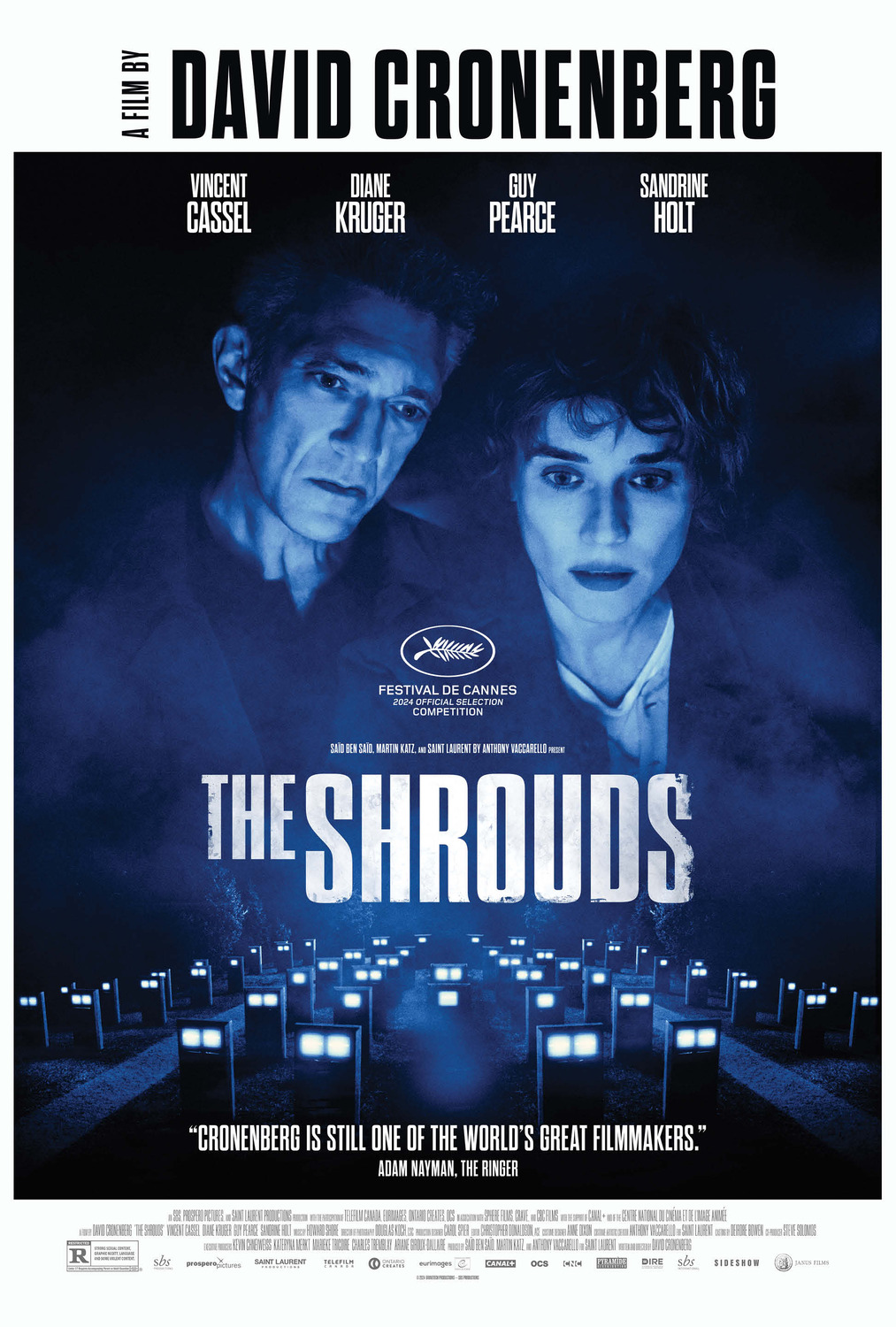
The Shrouds, The Ballad of Wallis Island, Workmates, Pavements and 2000 Meters to Andriivka are all playing in the New Zealand International Film Festival.
The first thing I’d note about this year’s festival programme is that it feels even more contemporary than last year. In recent years, I could avoid begging the festival for screeners by raiding my international streaming services but this year very few of the 100+ programme are so far into their lifecycle that they have made it online.
Indeed, most titles are fresh from this year’s big festivals like Sundance, Berlin and Cannes or are still making their way around the circuit. A few have received cinema releases overseas but most still have that to come – if they are lucky enough to have that in their future.
At the end of last year I did a survey of the films from many international ‘best of’ lists to see which had made it to screens here and was surprised to see how many were M.I.A. or had only screened at the festival. Looking at that newsletter again, I can tell you that Good One, Green Border, Sleep, Pictures of Ghosts, Eno1, The Seed of the Sacred Fig2, The Settlers, Totém3, Omen, The Delinquents and Samsara are still not available online here despite consistently featuring in ‘Best of 2024’ lists.
Another notable trend is the return of classic and retrospective films. I remember asking Bill Gosden why the festival wasn’t programming old movies and he told me bluntly that it was because they didn’t sell. Nowadays, audiences are responding strongly to vintage films being programmed by the Roxy and Embassy (in Wellington) and the Academy and Hollywood (in Auckland) and the festival is stepping up to meet that demand. Hard Boiled, The Texas Chain Saw Massacre, I’ve Heard the Mermaids Singing, Werckmeister Harmonies and the surprise late addition of Forgotten Silver, all bode well for audiences who want to experience cinema history on the big screen with – hopefully – big audiences.
To prepare this preview, I managed to find a couple of titles on American streamers but the rest are courtesy of Madman (which suggests they will have a life after the festival, either theatrically or on their DocPlay service). Because the process of finding these five titles was pretty close to random, I was surprised at how many connections there were between them.
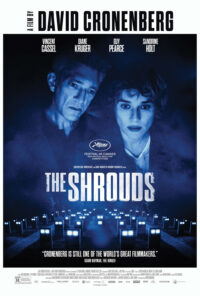
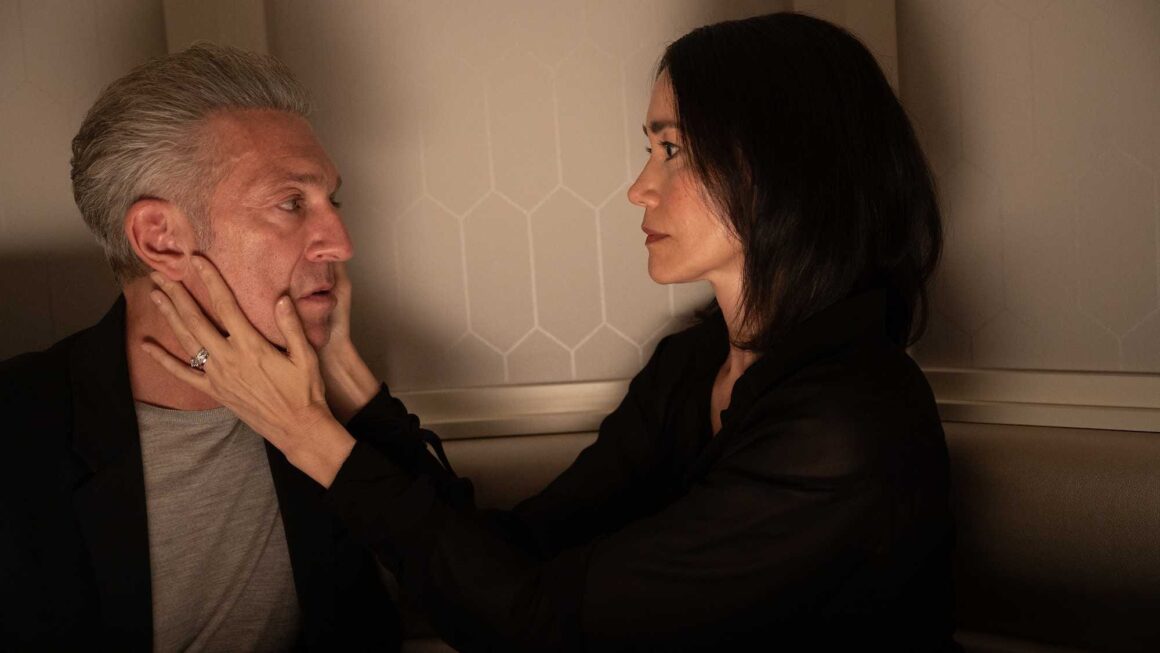
The Shrouds might be David Cronenberg’s most overtly personal film in an almost 60-year career. It contains many of his visual trademarks – the body horror moments are less plentiful but just as shocking when they arrive. Cronenberg avatar Vincent Cassel plays a grieving husband (Cronenberg lost his wife, Carolyn Zeifman, in 2017) who invents a kind of 3D scanning wrapper that can present an image of your deceased loved ones decaying body onto a headstone screen or, if you prefer, you can monitor it remotely using an app.
He’s a tech CEO now, planning a global expansion of these digitally enhanced burial grounds, but he’s also haunted by images of his late wife (Diane Kruger who also plays her twin sister) and the terrible deterioration as cancer spread throughout her body.
While grief is both text and subtext in The Shrouds, Cronenberg also gives us a modern thriller including both conspiracy theories and actual conspiracies, as well as satire about Chinese industrial espionage, digital surveillance, self-driving cars and AI assistants who can present themselves as wombats to make themselves less creepy.
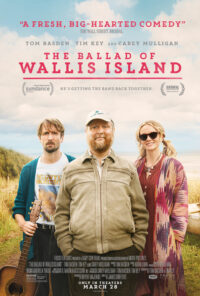
Ultimately, The Shrouds is about what happens to someone when they can’t keep a promise to the dead and The Ballad of Wallis Island navigates similar territory, although shrouded in cringe comedy rather than body horror.
What would you do if you were Lotto millionaire several times over and also a huge fan of a once popular but now defunct pop-folk duo from an earlier decade? You’d throw money at them to come to your remote semi-private island to reunite and give a concert just for you, wouldn’t you? Human nature.
Tim Key (poet, writer and Alan Partridge’s “Sidekick Simon”) is Charles. Socially awkward but very wealthy, he brings musician Herb McGuire (Tom Basden who co-wrote the film and all the songs) to the island for a gig and, without telling him, also invites former musical and romantic partner Nell Mortimer (Carey Mulligan).
The first third of the film emphasises the cringe aspect thanks to Charles’ inability to either read the room or turn off his motormouth but that’s eventually replaced by something quite heartfelt, helped by all the performances but especially Key who turns out to be doing something quite subtle. There’s a final shot where you can see he is having to finally let the past go and face the future and the mixture of excitement, fear and regret on his face is quite priceless.
For a while I was wondering why a commercial comedy like Wallis Island was in a festival that’s full of much darker work but by the end I realised that it’s because it’s really good.
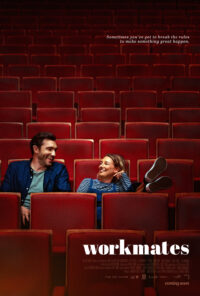
Another film that relies on taking the mickey out of the performing arts for its comedy is Workmates, made by Fantail’s Sophie Henderson and Curtis Vowell. As a former theatrician myself, I could see how accurate this portrayal of a tiny, underfunded, theatre in central Auckland was but also the glaring moments when that accuracy was sacrificed for (too) cheap laughs.
Henderson plays Lucy, former playwright now dedicated theatre worker Lucy and Matt Whelan is former actor and now dedicated theatre co-worker Tom. It’s not entirely clear why there’s no real demarcation between their roles except that we need them to be thrown together in the madcap running of this venue. Except that Tom’s girlfriend is pregnant and he needs to find a “proper job”.
The content below was originally paywalled.
The chemistry between the two leads is the main pleasure in Workmates and that ease suggests that someone should give them all decent development time and production budget so they aren’t stuck in such a self-referential situation. Theatre is so rarely portrayed well in film – The Great Lillian Hall’s Cherry Orchard is a decent example even if the production details are nonsensical while the off-Broadway productions in Materialists and A Different Man are simply not serious – that it’s slightly disappointing to see the local version treated as a figure of fun, even by its own practitioners.
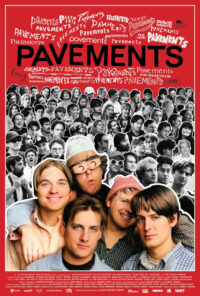
The documentary Pavements is also not to be taken seriously – a deliberate tactic on the part of the band Pavement and writer-director Alex Ross Perry. When the beloved 90s indie band reunited for a tour in 2022, they chose not to document it with a traditional rock documentary. Instead, they organised the development of a jukebox musical inspired by their music (Slanted! Enchanted! A Pavement Musical), a fake biopic in the tradition of Oscar-winning Bohemian Rhapsody, starring hot young TV actors as the band, and a museum exhibit of their memorabilia.
All of which is entirely in the spirit of the original incarnation of the band, supreme ironists in a decade that seemed fuelled by it. Pavement spent the 90s telling people how little they cared for the trappings of rock and how much disdain they had for their contemporary careerists, but when, in 1995, a Lollapalooza crowd humiliatingly pelts them with mud they not only have themselves to blame but successfully avoided building a fan base that might have defended them or prevented that from happening.
I care little for Pavement’s music and the film’s ironic distancing does little to bring me to it. In fact, the only real moments of sincerity in the film are the segments around the musical’s rehearsal and performance.
The 90s was the last decade where bands like Pavement could have made it as big as they did. You only have to watch Ondi Timoner’s Dig! to see how record companies, promoters and MTV were falling over themselves to throw money at unlikely hit bands, funding their three-sided vinyl records and indulging their snide attitudes.
Having said that, on its own terms Pavements is often very funny but watching a band not want to make a connection to its audience for over two hours was exhausting.
20 Days in Mariupol was a heartbreaking documentary about the relentless Russian assault on the Ukrainian industrial city and the toll taken on the civilian population. Thanks to journalists who refused to evacuate when self-preservation instincts should have been screaming at them to get the heck out, we have a document of the atrocities committed thanks to this profoundly stupid and unnecessary war.
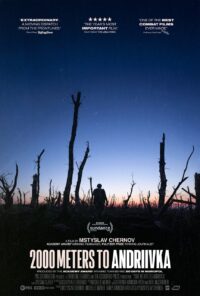
Now, more Associated Press reporters have put themselves in harm’s way for a film about the frontline in that conflict, 2000 Meters to Andriivka. A tiny sliver of forest between two minefields is the path for Assault Battalion 3, on a mission to liberate a tactically important village, potentially severing the Russian supply lines to Bakhmut. At least that was the theory.
Thanks to the embedded reporters and GoPro helmet cams on the soldiers, we get as close to the horror of battle as I ever want to get. I once hear someone describe the terrible hand-to-hand fighting in the Falklands conflict – an ugly reality kept from the folks back home – as like “a daft brawl in a bar”. The Ukraine conflict has more technology than that – real-time drone footage allowing battlefield commanders to steer their squads from foxhole to foxhole – but it’s still fierce and terrifying, inch-by-inch.
I read something the other day pointing out that Putin has been in charge of Russia for so long that anyone under 25 hasn’t known any other régime. The indoctrination on the Russian side is complete and as long as they can continue to throw willing bodies at the frontline no one in Ukraine – or the rest of Europe for that matter – can be safe.
This film is desperately sad and can’t avoid ending with a sense of hopelessness at the waste of it all.
*I know for Auckland subscribers this isn’t a preview any longer. I hope you are already having a great festival!
- Because Eno is a digital presentation that re-edits and reorganises itself for every screening, it’s unlikely to ever appear as a streaming product. Maybe as an app? ↩︎
- The Seed of the Sacred Fig did get a brief theatrical release but isn’t available for home viewing yet. ↩︎
- The Seed of the Sacred Fig did get a brief theatrical release but isn’t available for home viewing yet. ↩︎