Origin, Challengers, Abigail and Mad About the Boy: The Noël Coward Story are all in cinemas
Greetings new subscribers. Friday is new releases day where I try and cover as many of this week’s new motion pictures as I can, whether in cinemas or streaming. Today it just so happens that they are all theatrical.

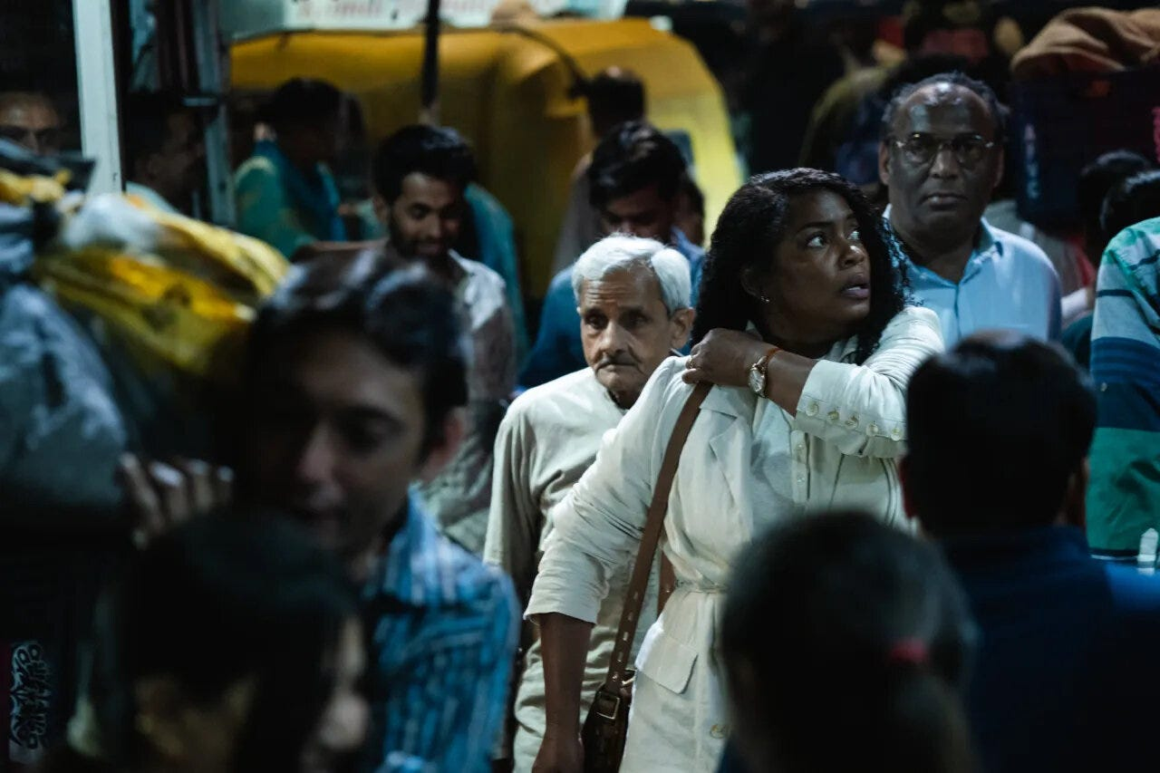
The most important new film of the week is also the hardest to see. Ava DuVernay’s rigorous and ambitious Origin has divided critics since it first appeared in Venice last year but the film – and the discussions it needs to provoke – deserves more than the handful of sessions it is getting in Wellington this weekend.
Simultaneously inspired by, and an adaptation of, Isabel Wilkerson’s bestselling book Caste: The Origins of Our Discontents, the film challenges us to think again about the issue of racism. Not its impacts (which are visible and to a degree addressable) but its origins, which for many people is a much more uncomfortable topic.
Wilkerson (Aunjanue Ellis-Taylor) is an academic and author living a life that, from the outside at least, appears to be insulated from bigotry. She lives in middle-class security, has a tenured university position and a loving white husband (Jon Bernthal).
When Black teenager Trayvon Martin is murdered by a vigilante she is asked to write an article about it. Initially resistant – she writes books now, she says – the recording of the 911 call shocks her to dig deeper. The question of why a latino man would kill a Black kid to “protect” a white neighbourhood perturbs her. When ‘brown’ attacks ‘brown’, is racism what we are seeing? Or is racism just an example of some other – deeper-seated – form of ‘othering’, of dehumanising.
The film draws parallels between the racism that Black people in America continue to experience (based on clearly identifiable racial characteristics), antisemitism (not usually based on how someone looks) and the pernicious continued prevalence of the caste system among Hindus in India – a prejudice that occurs within racial boundaries.
So, if this kind of dehumanisation can occur without clear racial or skin colour rationalisations, she asks, what is it that we are actually seeing?
And then she goes a step further. At a backyard barbecue she asks a friend whether she thinks that slave owners considered their slaves to be less than human. Her friend concurs. But, she replies, the author Toni Morrison points out that if they thought we were less than human, why did they get us to look after their children?
Dehumanisation is a kind of smokescreen. Racists don’t necessarily believe that their victims are lesser beings, they just tell themselves that because it makes their choices easier to live with.
And those choices are mostly about something as simple as, “you have something and I want it”. Greed. Capitalism.
Sandra Hüller’s character in The Zone of Interest believes that the Jews being gassed next door are not worthy of consideration because the most important thing to her is that she and her family get to live the life of affluence that their murder allows. If thinking that Jews are subhuman means she sleeps at night, so be it.
To some viewers this might not seem like such a startling insight but the examples that DuVernay uses, and the stories she tells, are extremely pertinent and powerful in their own right.

Luca Guadagnino’s Challengers is a thoroughly entertaining romp set in the world of professional tennis.
Zendaya, proving that she is a movie star of the first rank, plays a former prodigy who has to retire through injury before she even gets to turn pro. When we meet her she is wife and coach of a champion whose career is going downhill (Mike Faist from West Side Story). In an attempt to get some easy wins under his comeback belt, they head to a tiny tournament where he has to face off against his former doubles partner – and her former boyfriend – Josh O’Connor. He, too, needs to win this tournament before his fading career expires.
This menage is told with some furious intercutting between timelines, usually explained with captions but also by keeping track of hairstyles.
The film is surprisingly astute about the intersection of ambition, talent and lust and whether there’s a combination of the three that can ever add up to love.

This week’s horror is a vampire movie made in Ireland but set in the US. In Abigail a ragtag crew of criminals is recruited by Giancarlo Esposito to kidnap an heiress. What they don’t realise is that said heiress (Alisha Weir from Matilda the Musical) is actually a 300-year-old vampire and that she is the one doing the actual recruiting. This motley bunch aren’t there to protect her, they are there to entertain her.
Directors Matt Bettinelli-Olpin and Tyler Gillett were at the helm of the recent Scream reboots (which I haven’t seen) but they were also responsible for the excellent Ready Or Not in 2019 (reviewed for RNZ back in the day).
Strong characters, played to the hilt by committed actors, and an excellent mix of visceral practical effects help make Abigail a very successful comic horror. With one exception (Melissa Barrera as Joey), this bunch of eejits deserve all they get so you can cheer on every amusing kill with a clear conscience.

Successful horror relies heavily on timing and so does comedy and there are few greater exponents of it than English entertainer Noël Coward. There are plenty of examples in the new biography of him, Mad About the Boy, and the film itself manages a couple of moments that make you want to applaud the storytelling.
Coward was a fascinating man. Born in 1899 into a poor family – his mother ran a boarding house – he left school at the age of 9 and was the family breadwinner two years later thanks to acting talent, single-minded ambition and a prodigious appetite for hard work.
The arc of his life is remarkable. A phenomenally successful stage actor and writer in the 1930s, when World War II came along he was recruited by MI6 to spy on the Americans (!) and then made and starred in one of the finest pieces of British propaganda ever, In Which We Serve. For that film he basically discovered co-director David Lean and future director Richard Attenborough (it was his first screen credit).
Before the war ended, he wrote the classic Brief Encounter for Lean but after it his career became a victim of changing times and by the early 50s he was in debt and foundering. But then he discovered that his greatest asset was himself (and his repertoire of over 150 mostly comic songs) and he became a cabaret act and Las Vegas superstar.
The film relies heavily on Coward’s own writing (voiced by Rupert Everett), a couple of late-in-life television interviews and stories from long gone contemporaries like David Niven and Harold Pinter. There are no prognosticating modern talking heads in this picture!
There’s a lot to enjoy, not least Coward’s cabaret performance of “Mad Dogs and Englishmen” which contains some of the most idiosyncratic phrasing I’ve ever heard.