
Furiosa: A Mad Max Saga and Copa 71 are in cinemas
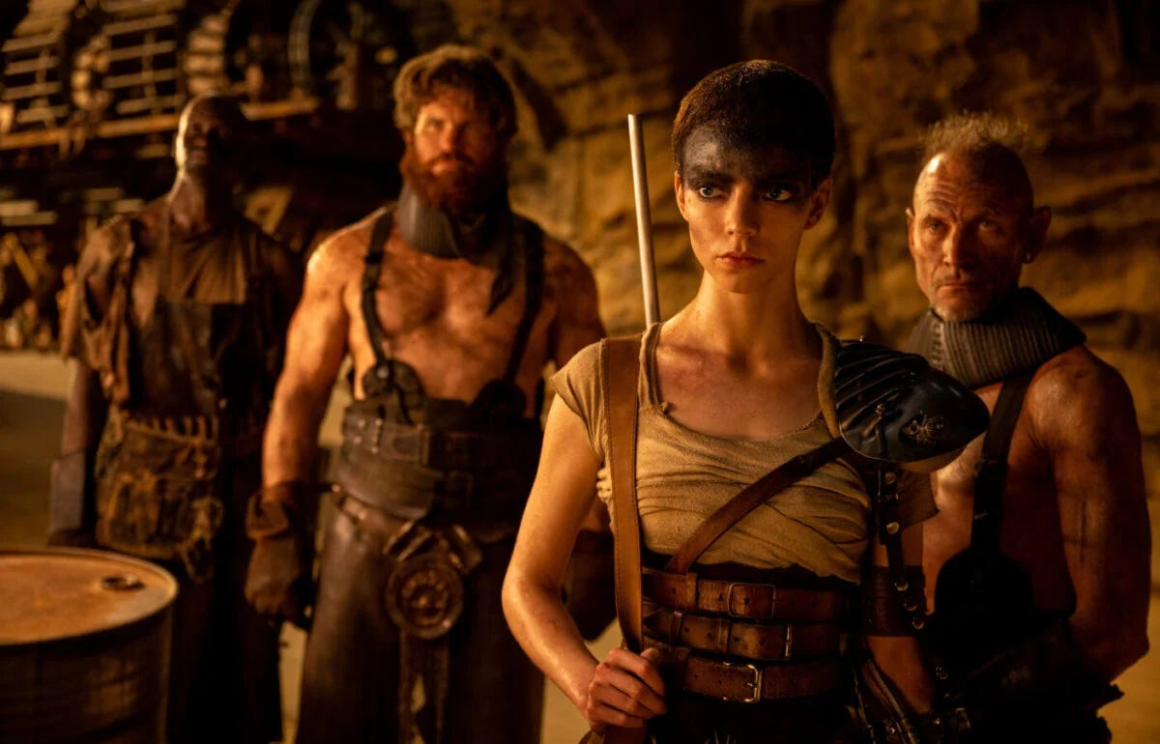
Firstly, apologies this is coming to you a little later than usual. I had a deadline for a piece about TV for RNZ (posting on Monday) and some travel delays caused by a ‘nationwide signals outage’.
Back in the day, when I was writing for the Capital Times weekly in Wellington, there might have been six to eight new films released in cinemas in any given week. This week, only two.
And in another sign of the times, Luca Guadagnino’s tennis-romance Challengers is now available as a premium digital rental (NZ$24.99) and it only landed in cinemas a month ago. Spare a thought for those movie theatres that are still showing it. It’s a tough business to be in at the moment and you would be doing the whole industry (and yourself) a favour by buying a ticket to the flicks this weekend.

Anyone expecting Furiosa: A Mad Max Saga to be as thrilling as George Miller’s last Max outing, Fury Road, are likely to be disappointed. That was a once-in-a-lifetime distillation of the essence of action movies, a three-day road trip to the desert and back, chased all the way by a bizarre collection of desperadoes, each coming together building on the last until the audience is practically mainlining adrenaline and gasping for breath.
This film isn’t like that. While it is a superb film on its own terms, the real triumph of Furiosa is that it manages to make all the other Mad Max films better.
By providing more context for the world of the Wasteland (a literal waste land as well as a literary reference) the movie is able to draw deeper emotions. When we realise that humanity’s self-inflicted fall from grace has been so rapid – only one or two generations not the centuries that it appears to be – it reveals a pathos that I hadn’t noticed before.
We met one-armed Furiosa in the last film, when she was played by Charlize Theron. This film, without the Max factor (forgive me), is her origin story. As a child (Alyla Brown) she is kidnapped from her “place of abundance”, a secret peaceful community with plenty of water and food. The film – and the previous one – are really just about her attempts to find her way home.
Her first captor is Dementus (Chris Hemsworth), a self-important fool whose attempts to take on the much stronger clans (the Citadel, Gastown and the Bullet Farm) leads Furiosa to Immortan Joe (Lachy Hulme), and her destiny.
What these later Mad Max films aren’t often given credit for is their intelligence. A classical education is not necessary to enjoy them but it sure helps. Miller and his collaborators take this craziness seriously and there is always something striking to look at. One example, off the top of my head, is the weapon that Praetorian Jack (Tom Burke) uses to defend the rear of the shiny new war rig he drives with the now adult Furiosa (Anya Taylor-Joy) as shotgun.
They are solid steel balls attached to the back of the truck on chains and when they spin at high speed, nothing can get through them. All well and good, except most of time they don’t spin, they are just dragged around looking like metal versions of those fake plastic testicles that people attach to their towbars for a laugh.
More poignantly, there’s the red cloak that Hemsworth wears, made from a plastic raincoat, fading to pink over the course of the film. He swears it wasn’t intended to remind the audience of his Thor cape but how could it not?
The content below was originally paywalled.
When I heard Hemsworth’s Aussie accent in the trailer for Furiosa, I was curious to see the extent that the franchise was leaning in (horrible phrase) to its Australian-ness. The films have always had plenty of Aussie details but I think it was only the first one that really located itself as Australia. Until now, the Wasteland could have been anywhere – generic post-apocalyptic desert – but the first visual in the film is the great brown continent of Australia, as we zoom in to the tiny green oasis where Furiosa and her mother lives.
And, sure enough, this paradise is a picture of peaceful multi-cultural Oz. There’s even the sound of a didgeridoo in the score at that moment. Of course, like peaceful Australia in another era, this is destined to be disrupted by greedy, boorish interlopers.
But that’s pretty much where any commentary on Australia stops. Once Furiosa is in the clutches of the Biker Horde, we are off to the races and Miller has much bigger things on his mind.
This one is going to bear multiple viewings, I think. It’s that good.

In 1970, 16 football teams went to Mexico to compete for the football World Cup. Brazil won it and, because it was their third victory, they got to keep the trophy.
One year later, six more teams landed in Mexico to compete for another world cup, but this tournament – thanks to the utter short-sightedness of the sport’s governing body – has been forgotten by history.
Until now.
FIFA, the organisation that ran world football, did not believe in women’s version of the sport, despite decades of evidence that women were desperate to play. Women’s football was not officially sanctioned and therefore a tournament like this one in Mexico was essentially a rebel venture. Luckily, Mexican promoters and broadcasters saw the potential and got behind it.
Because of FIFA’s ban, no stadium affiliated with the Mexican FA would have them. Luckily, the largest stadium in Latin America, the Azteca, was independently owned so, in a ballsy move for women’s sport, huge efforts were made to fill all 76,000 seats for every game and they came pretty close.
Like most people, I had never heard of the 1971 Women’s World Cup and James Erskine and Rachel Ramsay’s documentary, Copa 71, is full of jaw-dropping revelations, not least the fact that the Mexico-Italy semi-final was so violent that the game had to be called off ten minutes early.
As anyone who has been watching the A‑League this season will testify, the women’s game is easily as entertaining as the men’s, and it’s clear that FIFA shot itself right in the foot by keeping women out of the game for so long.
