
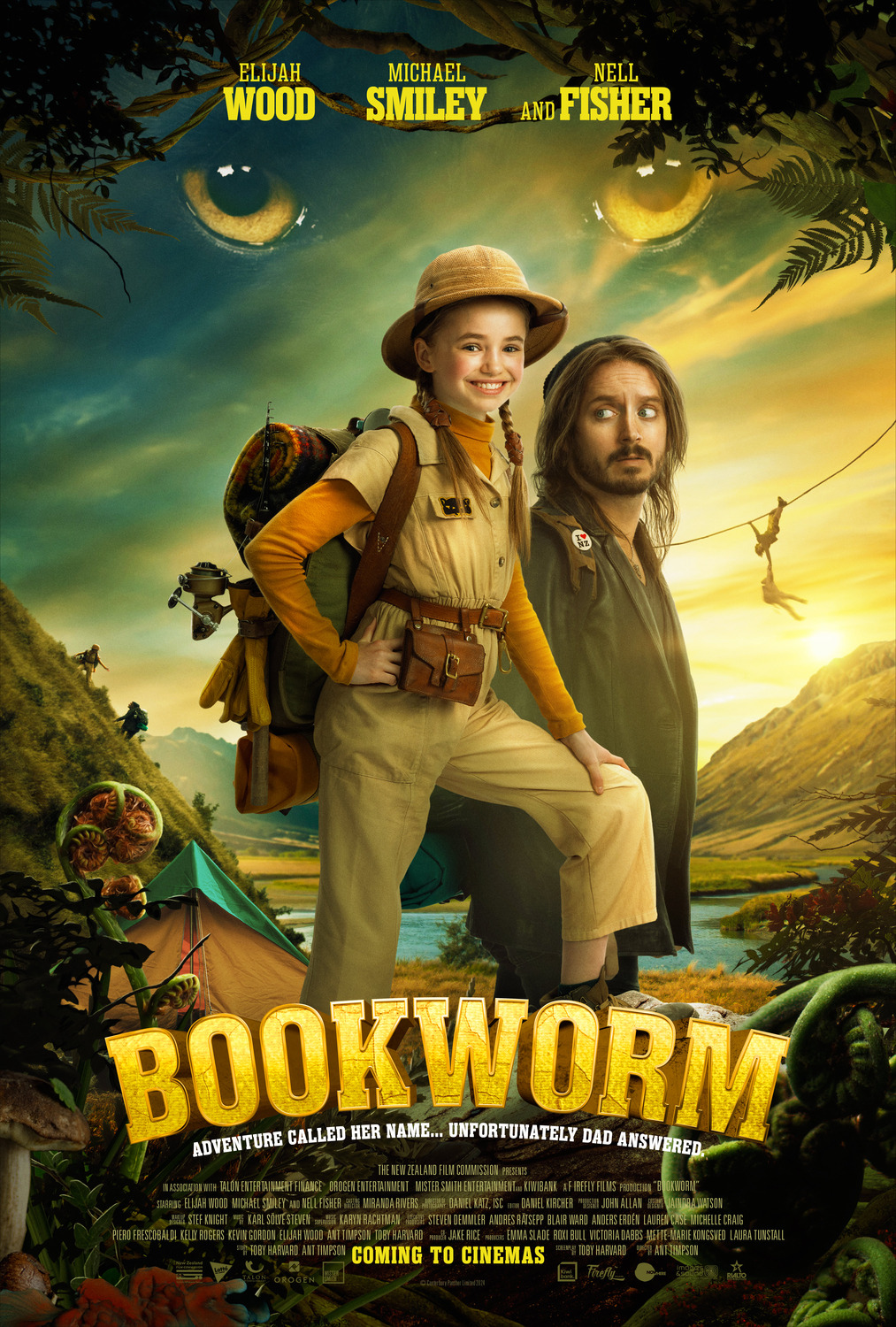
Bookworm, It Ends With Us, National Theatre Live: Dear England and The Three Musketeers: D'Artagnan are in cinemas
An interesting array of beards above. It’s been a quiet week at the streamers so all of this week’s new releases are in theatres.
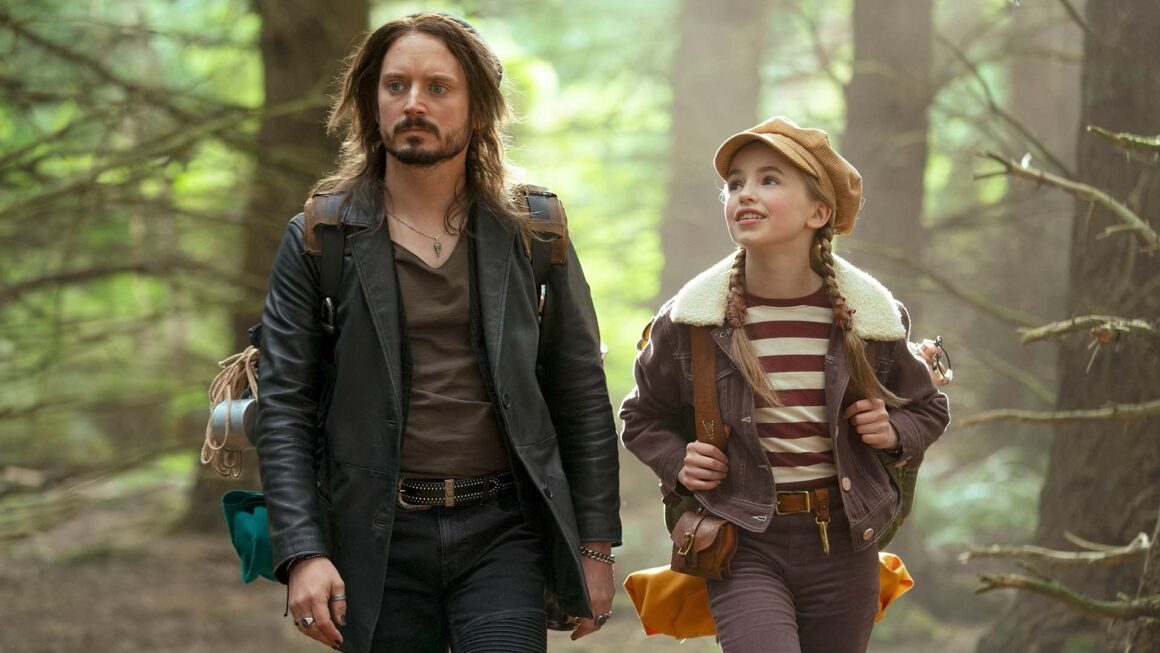
One of many pleasures to be found in Ant Timpson’s Bookworm is that the South Island landscape gets the kind of glorious treatment that is normally reserved for certain big fantasy films. New Zealand plays itself, for a change, and Timpson’s eye (with cinematographer Daniel Katz) for those wide expanses is a knowing riff on how we are normally shown those vistas, and the gag about going up to the rocks “where Liam Neeson played that talking Lion” is a decent one at star Elijah Wood’s expense.

(From memory, though, Frodo’s journey was to a very North Island Mount Doom and it was the rest of the fellowship that got to traipse around Canterbury and Otago. I stand to be corrected.)
Wood plays Strawn, a down-on-his-luck Magician (or “illusionist”) who travels half way across the world to look after an eleven-year-old daughter he has never met, after her mother has an accident with a toaster.
Mildred (Nell Fisher) has been promised an expedition into the wilderness to find evidence of the mythical Canterbury Panther, a big black cat that locals have been sighting for years without conclusive proof.
Against his urban, soft-centred instincts, Strawn agrees to chaperone Mildred on this trip but it is her knowledge of obscure bushcraft – gleaned from the books that gives the film its title – that gets them both into and out of trouble as the trip takes a much more adventurous turn than either was expecting.
The relationship between Strawn and Mildred is nicely grown, helped by the fact the her precocity stays just this side of being really annoying and that Wood – as he often does – leaves his own ego at the door and is content to look pretty ridiculous almost all of the time.
In the final climactic chase both characters are wearing their pyjamas – very fetching designs from Jaindra Watson but quite silly nonetheless.
And one final pleasure to cite: Northern Irish actor Michael Smiley can still be pretty terrifying even when he is ostensibly being funny, adding some grit to a very likeable family adventure film.

I worked in the book business for a few years and never heard anyone have a good word to say about Colleen Hoover’s oeuvre apart from an incredulous gratitude for how much money it made. Her books – initially self-published –have been driven to quite extraordinary levels of success thanks the BookTok social media phenomenon. Essentially, word-of-mouth on steroids.
The new film adaptation of her biggest hit so far, It Ends With Us, gives us an idea of why her work speaks so effectively to so many people. It’s essentially a romance with all of the fantasy details that adds so much escapist appeal to that genre. The central character is called Lily Bloom (Blake Lively) and she’s a florist. Actually everyone has an incredible name: her first love is called Atlas (Brandon Sklenar), her new beau is a neurosurgeon called Ryle (director Justin Baldoni).
And the coincidences are stunning. After a meet-cute with Ryle on the roof of an apartment building she aspires to but doesn’t live in, Lily becomes best friends with his sister Allysa (Jenny Slate) – not knowing that they are related to each other, of course – and when she goes out for dinner with her mother (Amy Morton) to introduce her to Ryle, the restaurant they choose belongs to long-lost Atlas.
The content below was originally paywalled.
It’s like there are only ten people who live in Boston, but that’s ok. It’s how this particular game gets played.
Where this gets interesting is that Lily is recovering from some very real (and for many readers/viewers) very recognisable trauma. Her father (Kevin McKidd) was a domestic abuser, but a pillar of their small-town community, and despite the fact she is determined not to fall into the same situation as her mother, her relationship with Ryle eventually bears far too close a resemblance.
So, the dramatic situation becomes painfully real and its resolution fantastically satisfying. On the way, the film makes quite a few not-terrible choices and we get to see – at length – how much the camera loves Lively. It helps that she’s more than just a pretty face – she does a good job of carrying the emotional weight and preventing it from becoming too maudlin.

When I read the flyer for the current run of National Theatre Live presentations and saw that there was a play about Gareth Southgate, my first response was that they really will make theatre about anything these days. But on reflection, I realised that an institution like the NT has an obligation to reflect all of the society in which it exists, not just Shakespeare luvvies (although there’s a fair amount of that still to come).
But the story of Southgate’s leadership of the England football team, from yet another lowest ebb to the brink of immortality, really does transcend sport.
Southgate revolutionised élite level sport in the UK by bringing in psychologists and counsellors to support young millionaires who were struggling to see themselves as a team, and then by encouraging them to see each other as whole people who could contribute their voices to a society that was fracturing in front of their eyes.
And to recognise that despite all their power off the pitch, what was defining their performances on it was fear – that most pernicious of emotions – a fear that Southgate himself had unwittingly contributed to when he famously missed that penalty against Germany in the 96 Euros.
That penalty haunts him as well as the contemporary players. The play opens with the current Southgate (excellent Joseph Fiennes) watching the younger one fail and team psychologist Pippa Grange (Gina McKee) can see how hard Southgate tries to assure everyone how he has put it behind him until a devastating speech near the end of the first act.
The play is also about England – Dear England was how Southgate addressed his occasional open letters to the fans – and how a country struggling to handle both Brexit and Covid needed something to rally behind but how that rallying ended up just increasing the pressure Southgate was trying to avoid. England, it could be saying, you’re your own worst enemy.
It’s episodic theatre, needing to hit all the story beats so that well-known moments of triumph and defeat are all there, and for all the talk of seeing the players as complete people it does often reduce them to the single thing we all know about them – Maguire’s head, Rashford’s grandma, Dele Alli’s mental health. Will Close’s perfect imitation of Harry Kane’s inarticulate sincerity never fails to raise a laugh, until he, too, finds heartbreak in a penalty kick.
But often, James Graham’s play hits a perfect note. In the scene where Eric Dier (Ryan Whittle) is dropped from the squad for Euro 2020, he says, “If it’s the best thing for the team that I’m not in it, then it’s my duty isn’t it?” And then trudges off through the audience like Captain Oates going out for some time in Antarctica.

Here’s a bit of recycling, in case you didn’t get to read my review of The Three Musketeers: D’Artagnan from RNZ when it was playing in the French Film Festival:
The first cinematic adaptation of The Three Musketeers appeared back in 1903, barely 60 years after the publication of Alexandre Dumas’ novel and it has been a staple of the big screen ever since. There have been dozens of films inspired by the story – faithful, unfaithful, fanciful – but as long as France still has plenty of chateaux and chapeaux the Musketeers will continue to buckle their swashes on to our screens.
The latest version is a two-part, star-studded affair that was the second most expensive production in France last year.
Ambitious young D’Artagnan (François Civil) travels from Gascony to Paris to join the royal Musketeers, Louis XIII’s personal army. The capital is a city consumed by intrigue. Catholic France is under threat from Protestant insurgents, but King Louis XIII (Louis Garrel) wishes to avoid war.
There are spies everywhere and no one can be trusted, least of all the King’s top advisor, the fiendishly manipulative Cardinal Richelieu (Éric Ruf).
In a famous scene, D’Artagnan inadvertently finds himself fighting a duel with three different musketeers: Athos (Vincent Cassel), Porthos (Pio Marmaï) and Aramis (Romain Duris) until they are interrupted by a bigger enemy – Richelieu’s men.
This version of the story does a good job of honouring the fictional adventures of these (mostly) real people while grounding them in a gritty, historically accurate context. Although, allowances are made for modern gender expectations and the women characters (Vicky Krieps as Anne of Austria, wife of the King, Lyna Khoudri as Contance, her maid, and Eva Green as Milady, the mysterious super spy) all get more agency than they have in the past.
D’Artagnan is thoroughly enjoyable up until the end when – if you don’t already have tickets to the second film – you will be frustrated by the cliffhanger ending.
