
We Were Dangerous, Blink Twice and The Sitting Duck are all in cinemas
Welcome to this week’s “women fighting back against their abusers” triple-feature. These are all interesting films but it has been pretty draining watching them all in one week.
When I reviewed Taika Waititi’s Boy back in 2010 I said something like, it’s either the saddest comedy I’ve ever seen or the funniest tragedy. When you walk that fine line and audiences can’t tell which is which, then you have managed to do both things well.
Waititi went on to co-found the production company Piki Films and his movies The Hunt for The Wilderpeople and Jojo Rabbit were produced there, as well as The Breaker Upperers (Sami/van Beek) and The Mountain (House).
The Piki house style draws a lot on Waititi’s own preferred combination of social comment and anarchic humour. Wilderpeople was a wacky comedy about a traumatised young boy who watches his foster mum die; Jojo Rabbit was a wacky comedy about Hitler and the Holocaust; Breaker Upperers was a wacky comedy on the theme of heartbreak and The Mountain was a wacky comedy about a teenager who dies of cancer.
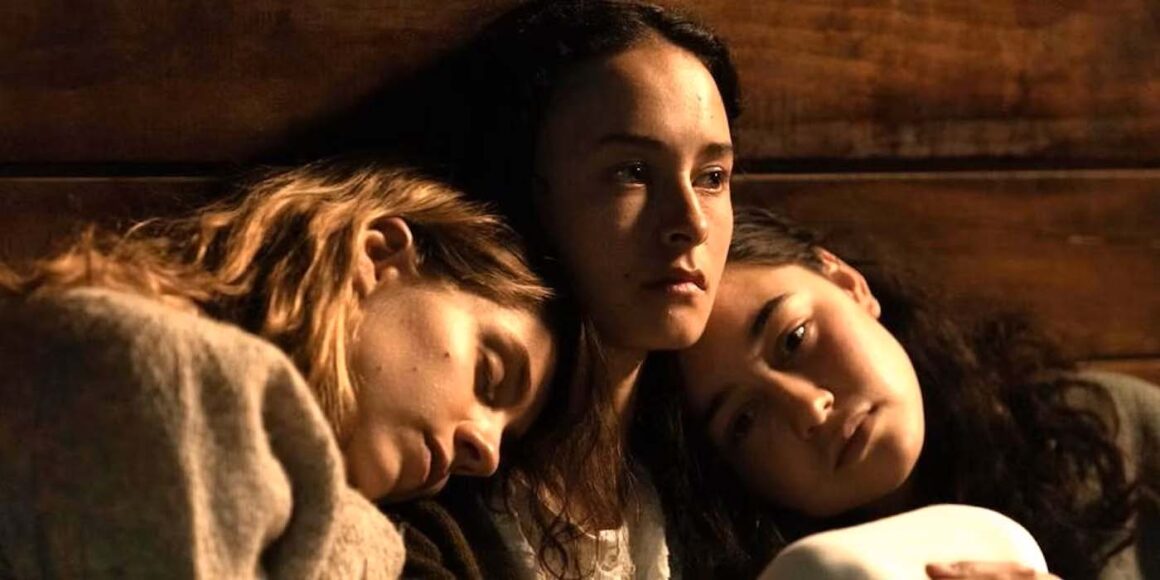
And now, arriving within weeks of the horrific and tragic report of the Royal Commission on Abuse in State and Church Care, we have We Were Dangerous, a film about female empowerment set in a 1950s New Zealand reform school for teenage girls.
It’s a comedy version of one of those institutions, given a comedy name – Te Motu School for Incorrigible and Delinquent Girls. In the opening sequence, it might as well be St. Trinian’s as Nellie (Erana James) and Daisy (Manaia Hall) have their escape plans foiled by mean old matron (Rima Te Wiata). Because of this failure of discipline, everyone is packed off to a tiny island in Lyttelton Harbour that was once a home for interned prisoners of war and (possible) lepers.
While We Were Dangerous tells an empowering story of female friendship and overcoming social injustice, it does so using the backdrop of the very real trauma and criminal abuse that occurred in those places. Classmates are mutilated in a makeshift sickbay to meet the demands of the patriarchal New Zealand authorities but those girls aren’t given real characterisations (or motivational flashbacks) like Nellie and Daisy. They are just motivational flotsam floating around in the background, like so many other examples of the real-world treatment girls like that would have experienced. They are alluded to – therefore acknowledged – but not attended to.
The film wants to be an uplifting story of feminist empowerment but because it doesn’t take the serious stuff seriously enough, it ends up as a romantic fantasy rather than being fully rounded.
I’m curious, too, about the title. It suggests that the story is being told from the point of view of the ‘dangerous’ girls, looking back on how they were perceived by the state, but the narration is by Te Wiata’s Matron – from a much more sympathetic viewpoint than she her character has in the film itself. Is the film suggesting that it was us – New Zealand – that are the “we” in We Were Dangerous? That would be interesting.
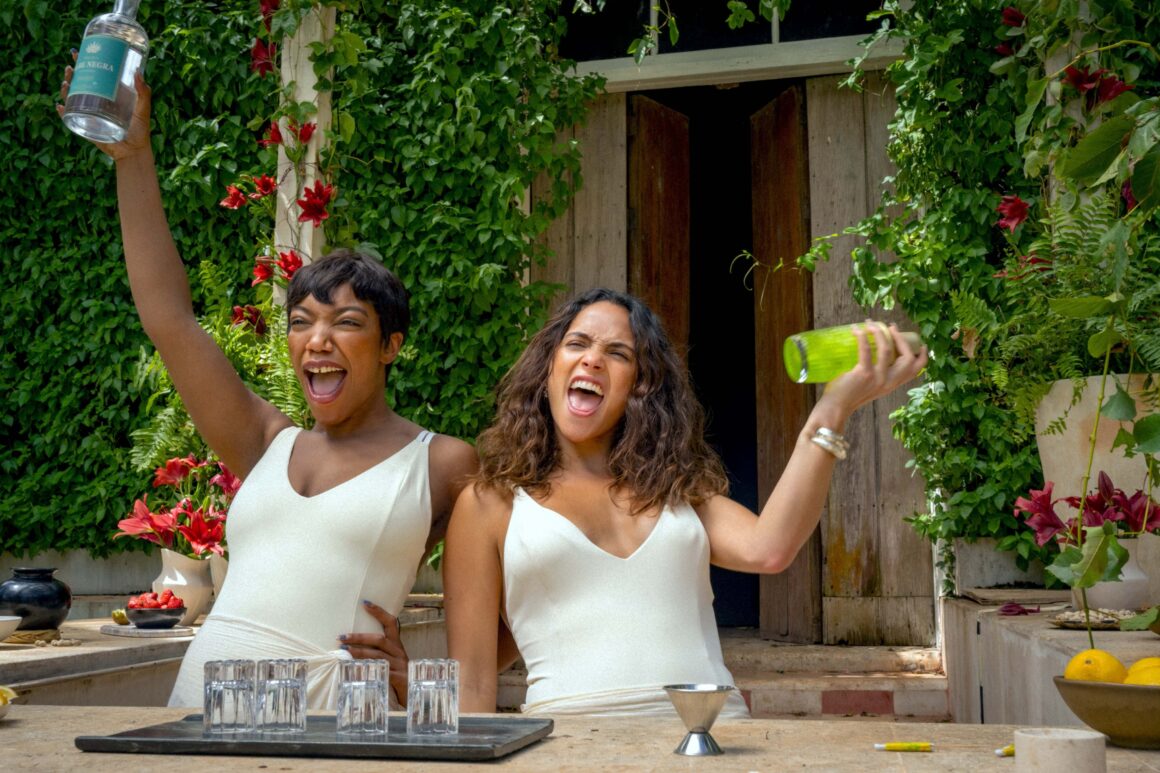
Watching Zoë Kravitz’ horror-thriller Blink Twice, I was reminded that in 1987 her mother, Lisa Bonet, starred in Alan Parker’s Angel Heart which traversed some similar thematic territory. That film also featured a character being tormented by slowly returning suppressed traumatic memories. As I recall, it also had a few chickens.
Reformed bad boy tech billionaire Slater King (Channing Tatum, very successfully playing against type) invites two broke flatmates (Naomi Ackie and Alia Shawkat) to join him and his rich and powerful friends at a party on his private island. There, they are welcomed into a world seemingly without consequences and where blacking out after a night of excess doesn’t seem that unusual.
But when they realise that all of the women at the party were procured in the same, seemingly random, way and that they don’t all come from the same privileged background as the men, things start to feel somewhat compromised and the confiscation of their phones on arrival was clearly not a contribution to their freedom to party.
It turns out that the sense of entitlement for these men – who include Christian Slater, Simon Rex, Kyle MacLachlan and Haley Joel Osment – goes a lot further than just expensive drugs, good food and fine wine.
The content below was originally paywalled.
The script by Kravitz and E.T. Feigenbaum is full – perhaps over-full – of carefully curated metaphors and allusions and has plenty of satisfactory call-backs and twists. It’s architecturally sound, as is Kravitz’ direction. I enjoyed it a lot, even though I was forced to grimace more than I am usually comfortable with.
It’s interesting – and probably another aspect of Kravitz’ argument – that when these entitled rich boys get the ability to have complete freedom over women, what they do with that freedom is so banal.
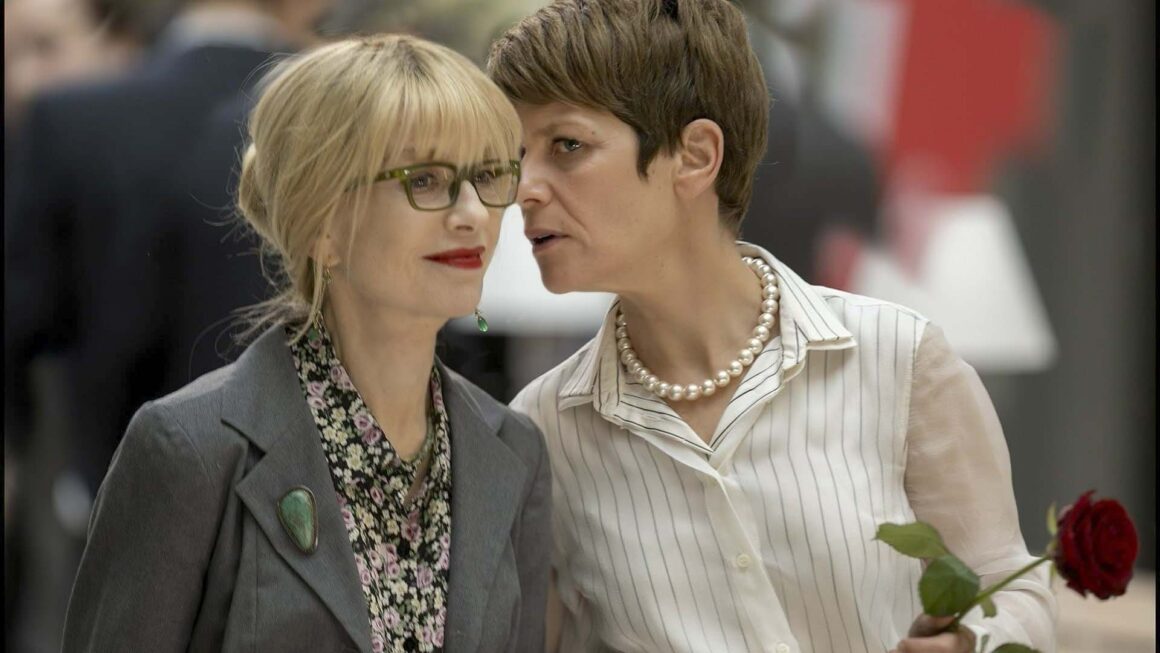
New Zealand audiences will watch Isabelle Huppert in The Sitting Duck (aka La syndicaliste) and wonder if they are watching science-fiction. So many aspects of the French political and business culture that it shows us are simply inconceivable in a local context.
Firstly, it assumes that nuclear power is not only a real, desirable and politically important thing – so politically important in fact that the biggest nuclear company in France would be majority state owned and that the president could hire and fire the chief executive – and that not only are workers represented at the highest levels of management but that their representative has the ear of government ministers.
But it is a true story. This is how things work in bigger countries than ours. Huppert plays Maureen Kearney, the worker rep at Areva in 2010. Caught in a power struggle after her boss (Marina Foïs) is ousted she is told about a secret deal to sell French nuclear technology to the Chinese in exchange for access to key contracts.
When she blows the whistle, she is immediately demonised by the patriarchal establishment which goes all out to ensure that she can not be taken seriously. Eventually she is even attacked and violated in her own home. Even then, the powers-that-be are determined to destroy her reputation, weaponising her history of alcoholism, depression and workaholism.
The tension in this film results from the questions that are asked about her reliability and Huppert’s longstanding ability to hold and play two contradictory thoughts at the same time are key to it. You start out by thinking this is a drama about capitalist intrigues and corporate double-crossing but it ends up being about much more.
