This week, two films about warriors battling post-traumatic stress who are forced out of retirement one last time in order to fight an emerging evil, two films about peace-loving people challenged to take up arms against state-sanctioned evil, and two innocents manage to save the world from catastrophe in spite of themselves.
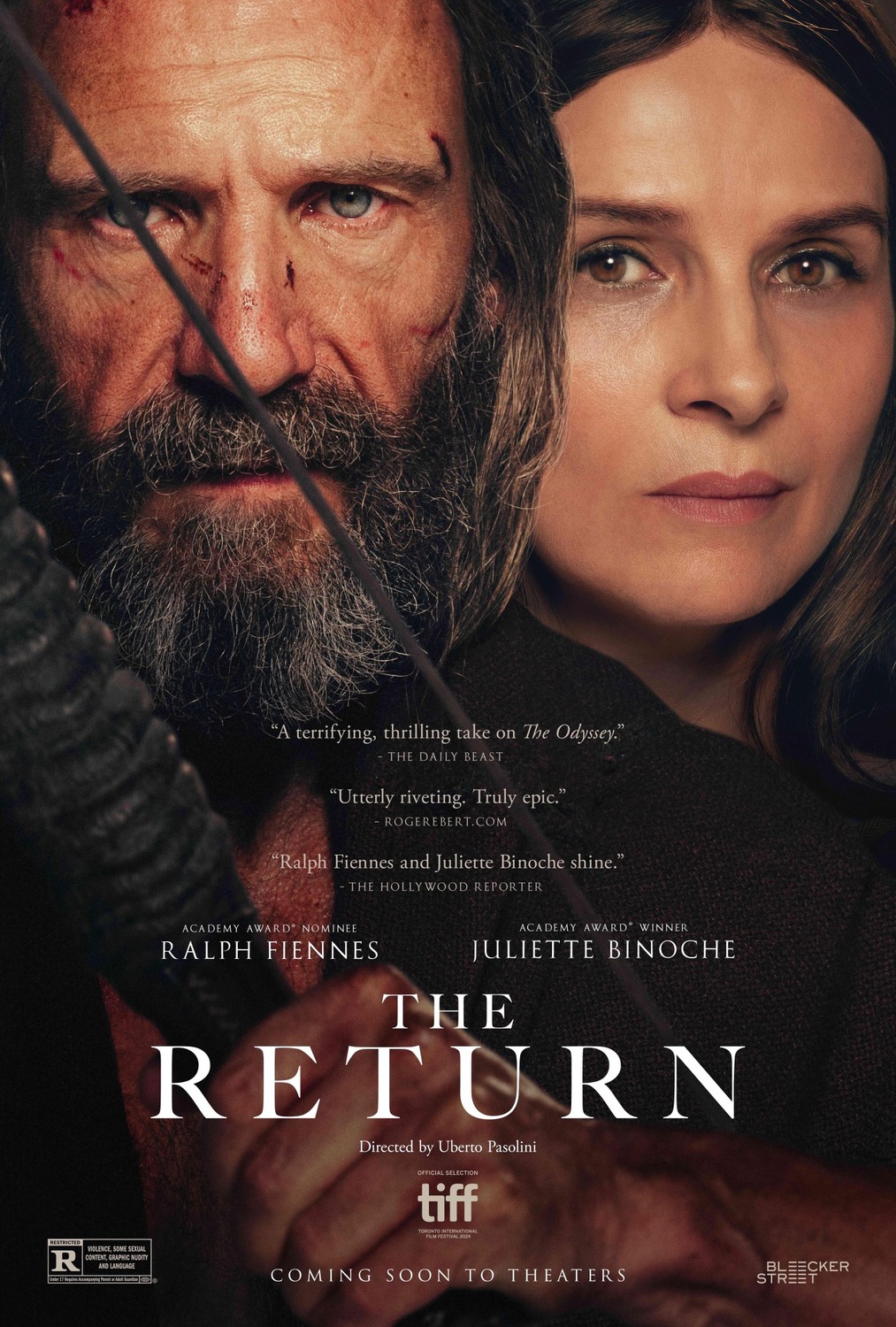
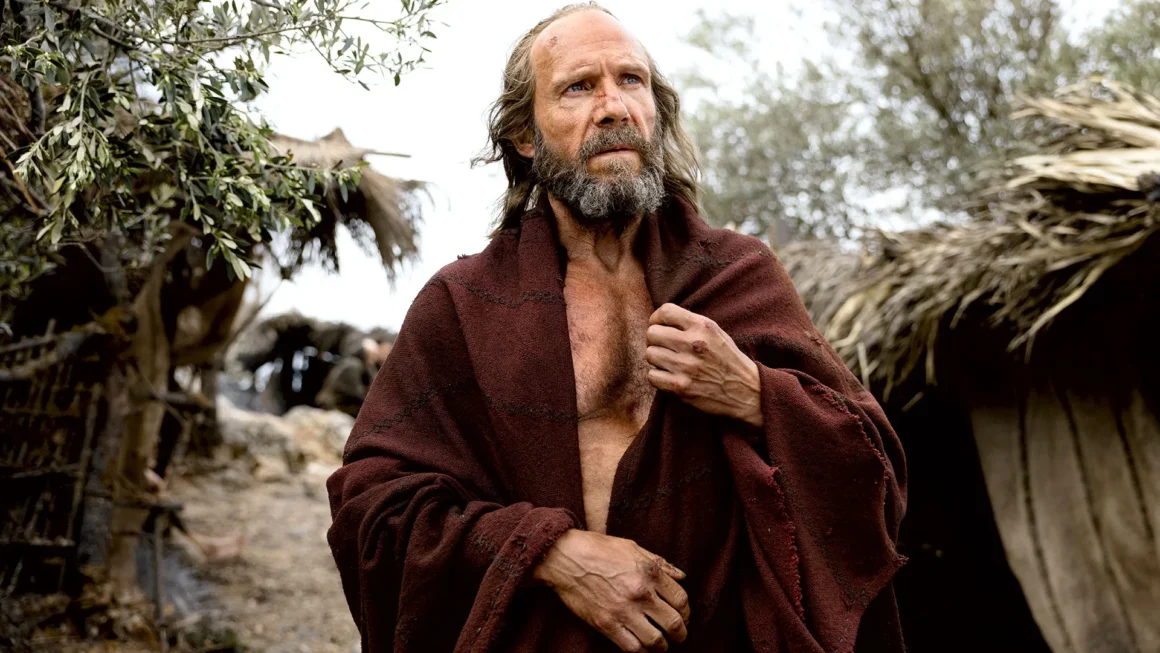
In The Return, director Uberto Pasolini (with co-screenwriters John Collee and Edward Bond) goes back to the classics. By choosing one of the final chapters of Homer’s Odyssey, they are more interested in the fallout from adventure than Odysseus’ adventures themselves. When the unrecognisably dishevelled former king (Ralph Fiennes) washes up on the shores of his home island of Ithaca, he has been away for decades on a journey that brought glory (the Trojan campaign and that wooden horse) but also tragedy. Unwilling to face his people with the truth he disguises himself (easily as it turns out) as a beggar and learns what has become of his wife, son and subjects since he gallivanted off around the Peleponnese all those years ago.
His wife, Penelope (Juliette Binoche), is surrounded by optimistic suitors, hoping that they can take Odysseus’ place and the riches they think go with it. Their son, Telemachus (Charlie Plummer), is a rebellious youth who knows everything about what’s right and wrong except how to fix things.
The Return is a classy production, as you might expect, and the script is suitably highbrow without disappearing up its own fundament (like William Tell earlier this year). The dénouement is so violent that it came as a surprise to many in our audience – hearing people gasp is one of the great pleasures of the cinema that just aren’t the same at home – and Fiennes acquits himself so well you wonder whether he didn’t miss a trick by not moving into action films a long time ago. (Maybe the failure of The Avengers reboot put him off.)
For a long time in The Return, I thought it was a story of post-traumatic stress, of guilt and shame –and it is that – but it also asks whether a warrior can ever really change. Is that danger going to be ever-present, and what does that mean for the people who love him?
The same question is also at the core of David Ayer’s new collaboration with Jason Statham, A Working Man, the follow-up to the surprise smash The Beekeeper last year. Once again, Statham finds a way to excuse his inability to run an American accent by being an ex-Royal Marine, now widowed and living in Chicago to be close to his daughter, whose grandparents keep him at arm’s length. He’s traumatised by the loss of his wife, his guilt for prioritising service to country over his family, his impending loss of access to his daughter. He’s living in his truck in order to save for legal fees to fight this injustice but as his truck is worth as much as a small house, you have to wonder if he’s really thought that plan through.
Despite his determination to “not be that person anymore”, he’s surprisingly quick to get back into action when he sees innocent people threatened or, especially, when his boss’s daughter is kidnapped by Russian people traffickers. Then he’s off to the races, as he becomes detective, judge, jury and executioner, working his way through the ranks of oligarchical henchmen. Each set-piece is suitably enlarged on the one before and the “kills” – as they call them – are often quite inventive.
As usual, Statham’s limitations are his strength, and the ridiculousness of the Russians is a joy. I’m perfectly happy for them to be the all-purpose villains for our current generation.

The Seed of the Sacred Fig states its allegorical intentions up front with the opening captions, telling how the ficus religiosa wraps its roots around the host plant, “eventually strangling it”. Yet another Iranian film, shot in secret and then smuggled out of the country, you have to wonder whether the Iranian government realises that their restrictions, censorship and imprisonment are actually causing more masterpieces to be made than ever before – certainly seems counter-productive.
In a middle-class family, the father (Missagh Zareh) has been promoted within the Justice Department to a Judge-Investigator, a sensitive and prestigious position. His wife (Soheila Golestani) is worried that if their daughters get involved in street protests it will risk their status and their shift to a bigger flat. He is more concerned that his position makes him a target for revenge and he brings home a pistol for self-defence. As any student of Chekov knows, there’s only one possible outcome.
Powerful and thrilling on its merits, Sacred Fig grows into masterpiece status when taken on that allegorical level. The father represents the state, increasingly desperate to maintain control but also collapsing from within due to the moral contradictions he has to live with every day. The mother is the trusting citizenry, wanting to make the best of a system that is clearly flawed but what can you do? And the daughters are the future, risking their lives on the streets.
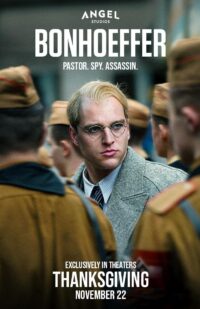
It turns out that, for a long time, I’ve been confusing German theologian Diedrich Bonhoeffer with Pastor Martin Niemöller (who wrote that poem about ‘first they came for the socialists …’) so when I saw the title of the Bonhoeffer biography (Bonhoeffer: Pastor. Spy. Assassin) I thought to myself, well, that escalated quickly.
Turns out that I wasn’t a million miles away, as Niemöller (played by August Diehl) is a character in the film as their paths crossed regularly before Niemöller was interned by the Nazis in 1938. Bonhoeffer and Niemöller had disagreed during the early years of the régime about how far to take their resistance.
The film is one of those values-based, faith-based pictures but I don’t mind the ones that don’t get too fixated on miracles or bible-literalism (there were trailers for two of those before this film yesterday). Bonhoeffer (Jonas Dassler) was a theologian and prolific essayist and author whose resistance to the Nazis resulted in his execution just a couple of weeks before the end of the war.
To my unsophisticated mind, this is a film about faith and then, how does that faith serve you in the world? What good is faith if it doesn’t help you see the difference between right and wrong and then help you decide what to do with that knowledge afterwards? The film suggests that Bonhoeffer threw his pacifism under the bus when the Nazi atrocities became intolerable but there are some suggestions that the film exaggerates this transformation for dramatic purposes.
I can’t comment on the history, but I did think that the wrestle that goes on within this fictionalised Bonhoeffer was an interesting one and there was stuff in there that I didn’t know about the Nazis commandeering of organised religion (and of the organisers of religion).

Looney Tunes: The Day the Earth Blew Up is a kind of ‘proof of concept’, demonstrating that hand-drawn, gag-driven, surrealist animation still has a place in a world dominated by sentimental old Pixar and Disney. To that end, it’s perfectly fine. In this version of the characters, Porky and Daffy are brought up together by kindly Farmer Jim who then expires, leaving them the house which they promptly – but good-humouredly – trash.
Needing money urgently to fix their roof, they get jobs at the local Bubble gum factory just as the new flavour is about to be launched worldwide and turn the world into gum-chewing zombies. Not quite as anarchic as its predecessors, after saving the word from the alien gum invaders, Porky and Daffy are themselves saved by something as prosaic as an insurance policy. How straight!