It’s been a big — and mostly satisfying — week for new motion pictures so, to squeeze everything in, these are going to be what we call in the biz “capsule reviews”1.
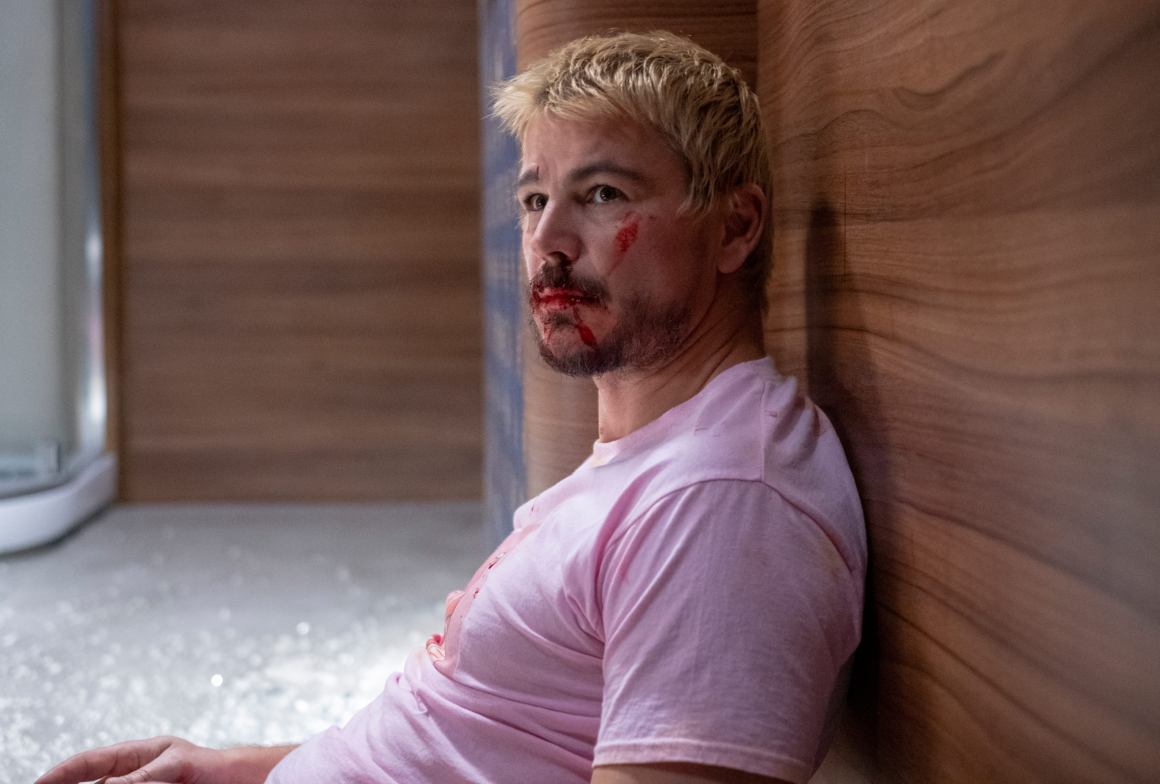
Fight or Flight is in similar territory to one of last week’s favourites, The Toxic Avenger: a high concept, low culture, crowd-pleaser, shot for pennies on the dollar in Eastern Europe (Hungary instead of Bulgaria this time) with villains so monstrous that they thoroughly deserve the satisfying walloping they get.
After years in the movie star wilderness, Josh Hartnett plays a proper action hero at last: Lucas Reyes — a former Secret Service agent who has spent years of his own in the wilderness due to a morally defensible but politically unforgivable indiscretion. Living in an alcoholic haze in Bangkok, he’s given a shot at redemption. A mysterious terrorist known as the Ghost — leaves no trace, no known aliases or description — may finally have dropped a clue in the form of a trail of blood leading from a dodgy veterinarian to the airport and a flight to San Francisco. Reyes has to get on that plane, identify the Ghost and make sure they are alive to face justice on the other side.
Unfortunately, there’s been a leak and almost everyone else on the flight is some kind of mercenary or bounty hunter, wanting the Ghost to become — as the kids say these days — unalive. And so begins a joyously demented remix of Snakes on a Plane and the Brad Pitt picture Bullet Train. There are plenty of gags at the expense of global air travel as well as creative use made of internal airliner geography. It’s when our hero discovers a chainsaw in the cargo bay that you know things are really going to kick off.
Hartnett apparently he did all his own stunts in the film — as well as some excellent drunk/stoned acting — but there’s also something meta going on here, as if he’s actually playing Channing Tatum playing Lucas Reyes rather than inventing a character from fresh cloth.
Margaret Gordon’s long-awaited documentary about local music legend Shayne Carter, Life in One Chord, was a tonic of a different kind. The two words that came to mind watching the first few scenes were ‘love’ and ‘laughter’ — not words that usually come to mind when talking about kiwi musos.
As the dryly amusing Carter (Straitjacket Fits, Double Happys, Dimmer, etc.) takes us up the steep Dunedin hills of his childhood, you can see that — despite some hard times taking place in the home he grew up in — he is grateful to have escaped the fate of some of his contemporaries, the ones referred to in the title of his autobiography, Dead People I Have Known. Returning to his high school — where despite his punkish rebellion, he seems to be remembered fondly — and to the community its hall in Maori Hill where the “Dunedin Sound” first found its voice.
Carter is refreshingly free of angst, even if the book alluded to more personal and professional challenges than the film allows for. This would make a good double-feature with the Marlon Williams film, Ngā Ao E Rua – Two Worlds, as both artists are coming to terms with their Māori heritage in a world that hasn’t been encouraging.
In Sorry, Baby, Eva Victor announces herself as a creative force to be reckoned with, winning the Waldo Salt Best Screenplay prize at this year’s Sundance Film Festival for a film that she also directs and stars in.
She plays Agnes, a New England literary academic, wrestling with the trauma of a sexual assault while she was a grad student. Told in out-of-sequence chapters, Victor shows how the shifting sands of grief, pain and loss make it impossible to do what most of the people around you want, which is to put it behind you (or at least be predictable about it).
An excellent supporting cast play characters who show varying degrees of actual support. Sorry, Baby feels heartbreakingly authentic but at the same time is charming and funny. I feel like the reliance on the literary canon to provide scaffolding — Woolf, Baldwin, Nabokov and that heartless patriarchal monster Ted Hughes are all enlisted — is the kind of short-cut that first-time screenwriters tend to lean on but that quibble is minor.
More than minor quibbles, though, about The Roses, a comic vehicle for Olivia Colman and Benedict Cumberbatch which is based on a 1981 novel which in turn was previously adapted for Michael Douglas and Kathleen Turner in the late 80s.
It’s a misanthropic story of a married couple, falling out of love and finding ways to destroy each other in the process. Cumberbatch is an arrogant architect whose signature building blows down in a hurricane, prompting his gifted chef wife, Colman, to make her hobby restaurant into a success. The resentment of each other — fuelled it must be said by vast quantities of fine alcohol and some annoying friends — eventually leads to a breakdown but no backdown.
The content below was originally paywalled.
I think we are supposed to see these characters as equally awful and equally to blame, but I couldn’t help thinking that Cumberbatch’s downfall is not so much an act of God as the result of his own hubris while Colman’s success is because she is exceptional at cooking and people like working with her. Therefore, Cumberbatch’s growing hatred has more than a few misogynistic undertones.
(I should point out that the editor-in-chief leaned in the other direction — Colman’s character should have been able to balance work and motherhood because that’s what women have been doing for generations.)
In the battle between Colman and Cumberbatch, the actors, though there is no contest. We’ve known for years that there are very few performers who come alive on screen quite the way that Colman does and, while he does his best — bless — I can still see the cognitive wheels turning for Cumberbatch as he tries desperately to keep up.
Occasionally, when a film clearly requires less than 100 percent of your attention, the mind can wander and I found myself thinking during The Conjuring: Last Rites, what kind of a film it might be if Colman and Cumberbatch were playing the famous occult grifters investigators, Lorraine and Ed Warren and not Vera Farmiga and Patrick Wilson.
It’s Farmiga and Wilson’s last go at the couple, even though the torch is clearly being passed to the next generation so we surely haven’t seen the last Conjuring, especially with box office this big.
Supposedly, the Smurl family of Pennsylvania was the Warren’s last case — we can add a mirror now to the comically long list of demonically possessed inanimate objects — and the film loses momentum in the middle as it gives Farmiga and Wilson an extra victory lap or two — but it reaches a suitably thrilling climax, which should keep fans happy.
I’m becoming something of a connoisseur of places pretending to be somewhere they are not and Devon failing to authentically resemble California in any way in The Roses is a classic — the grass is all wrong, the sand is all wrong, the sky is all wrong — but I was also immediately thrown by the working class 1980s street the Smurl’s live on in Last Rites. I felt I’d seen it before somewhere and, sure enough, it was built on the same Bovingdon Airfield runway that Patrick Garland used to construct a Ramallah street in Warfare earlier this year.
Don’t ask me how I know these things, I just do.
Much more authentic is Highest 2 Lowest, Spike Lee’s re-envisioning of Akira Kurosawa’s 1963 drama High to Low. Having spent six days in New York in my life2, I can completely vouch for how Lee presents his beloved city on screen, not least that the best view of Manhattan is probably from Brooklyn.
Especially from the penthouse apartment of music mogul David King (Denzel Washington). Respected, successful, comfortable, he’s about to enjoy a lucrative cash-out of his label, except he’s having second thoughts about the possibility of premature retirement and letting go of his legacy.
There’s a kidnapping attempt on his son Trey (Aubrey Joseph) but they take Trey’s best friend Kyle (Elijah Wright) instead and — knowing that Kyle is the son of King’s driver, Paul (played by Elijah Wright’s real-life father, the great Jeffrey Wright) — the believe that they still have leverage, asking for $17.5m. This is, coincidentally, the amount King needs to buy back his record label so the amount of leverage they actually have is questionable. Will King use his ‘save the record label’ money to ‘save the son of his friend’ — his son’s best friend?
This restored my faith in Saturday night streaming premieres. Apple have shown once again that whoever buys/commissions their feature content has taste and an appreciation for cinema. Highest 2 Lowest feels like a movie rather than something squeezed out of a tube. Not just any movie, it feels like a Spike Lee joint which means that every choice has energy and a degree of “I might not have chosen to do it that way but …”
There’s a scene later on in the film between Washington and rapper ASAP Rocky (as a rapper called Yung Felon) that dares you to take your eyes off it for a second. Washington may be 70 but there’s something about working with Lee that makes sure he’s still got game.
New to Aotearoa streaming audiences, but out for a while internationally, Mariska Hargitay’s documentary about her movie star mother, My Mom Jayne, is a tremendously moving study in how people cursed with fame or infamy are still complex, full-bodied, fascinating human beings.
Hargitay is best-known as the star of the long-running crime show Law & Order: Special Victims Unit, but she was the daughter of the blonde bombshell Jayne Mansfield. Hargitay was only three when Mansfield died in a car accident — she was in the back seat of the wreck with two of her brothers — and has no memory of her. Indeed, only knowing the pop culture cartoon character that her mother became, she consciously tried to make career choices that her mother wouldn’t have made.
At the age of 60, Hargitay decides she needs to know who this woman really was and the documentary is that journey of discovery with the help of her siblings and remaining friends of the family. Except, Jayne didn’t have too many friends — she had people who wanted a piece of her, to control her, to dictate how she was perceived. Far from being a dumb blonde, Mansfield could speak four languages, play the violin and piano, and was intent on becoming a serious actress. But that wasn’t what Hollywood wanted for her.
Moving and surprising, this film reclaims Jayne Mansfield for her daughter, but is also a reminder that every family is full of characters with their faults and insecurities, no matter how many magazine covers they appear on.
Not quite …
In New York in 2012, I was guided around Brooklyn by New York Times and RogertEbert.com critic Glenn Kenny. We got to S Elliott Place in Fort Greene and I saw this. It’s the 40 Acres and Mule Filmworks banner hanging off Spike Lee’s offices.