
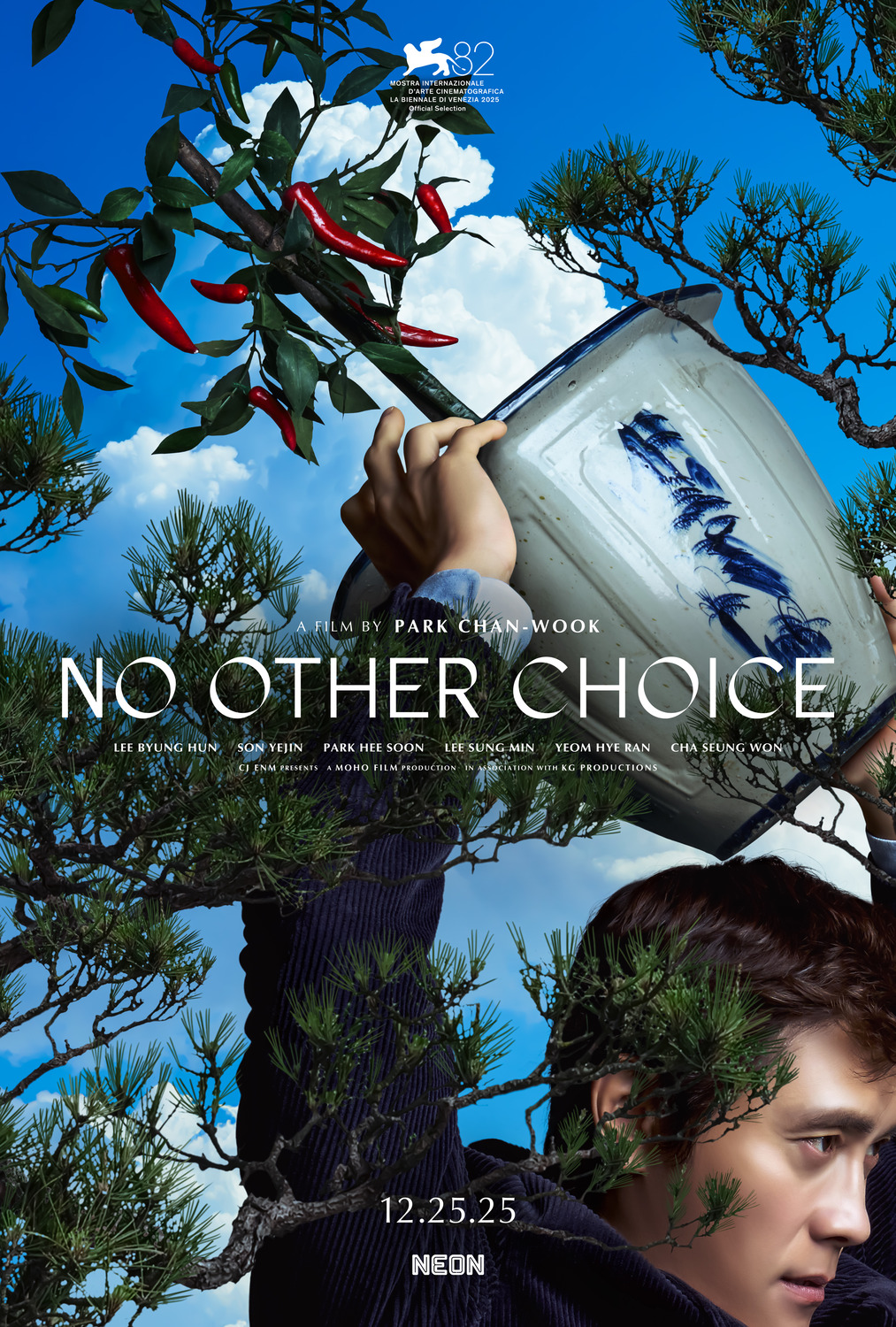
It’s a lovely touch that Director Park Chan-wook1 has dedicated No Other Choice to director Costa-Gavras who made the first adaptation of Donald Westlake’s 1997 novel, The Ax, back in 2005. Park came to the novel without knowing about the earlier film but Costa-Gavras still owned the rights and helped with its development.
Costa-Gavras (now 93) is famous for his politically charged films like Z and Missing and in 2005 a film about the dehumanisation of redundancy and corporate downsizing fitted right into his wheelhouse, but there’s something about how Westlake’s story plays in 2026 that takes it in a fascinating different direction without changing the excellent bones at all
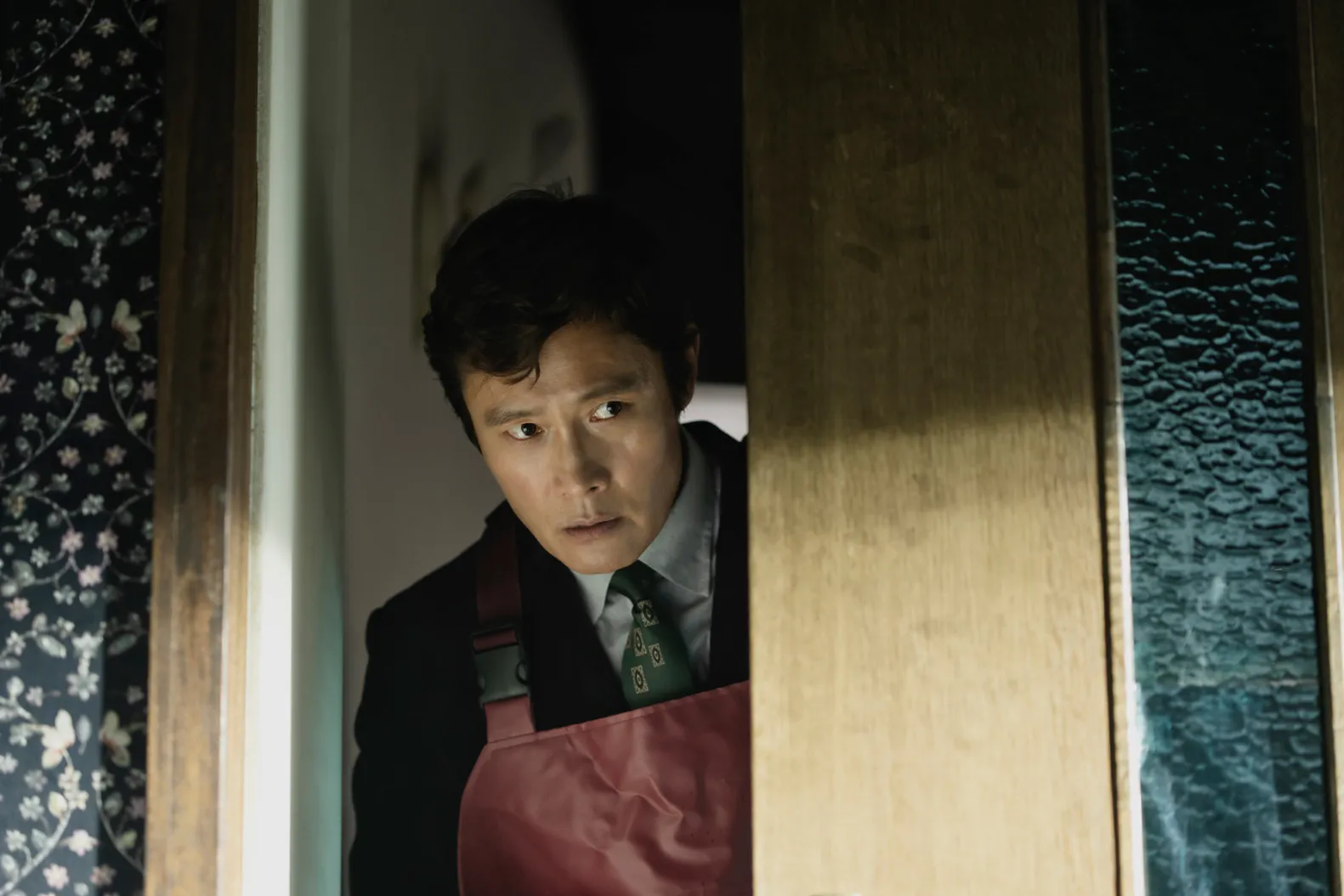
Lee Byung-hun plays a paper expert, inexplicably (to him) made redundant after an American company buys the company he works for. After 18 months of humiliating (to him) unemployment and underemployment, he reaches the realisation that the only way to get the job he needs (or deserves, or has earnt through years of study and experience) is to eliminate the competition – three other unemployed sad sacks who are hanging out for a chance to get back in the game.
A professional paper maker he might be but he is very much an amateur assassin and lots of the fun in the film is in watching his risible attempts at murder – farcical attempts worthy of early Coen Brothers films.
At first Lee’s motivations seem utterly comprehensible. He’s a family man, a breadwinner. He’s an award-winner and a loyal employee. Logic dictates that he take what he’s earnt. But where the 1997/2005 version of the story was about the ice-cold brutality of the corporate world, nobody in 2026 can look at the paper industry as one that isn’t sunsetting rapidly and its Park’s genius that he doesn’t try and update our hero’s profession.
He – and his targets – are all dreaming if they think there’s a future for them in paper and one of the themes of the film is that by clinging to this dream none of them pay any attention to the real brains of the outfit, their wives. Busy holding their households together (or sleeping with a delivery boy, or just leaving for a life that doesn’t exclude them), the wives give their men the room to dream, scheme, and feel sorry for themselves.
This is also where Park’s approach feels particularly well-grounded in Korea, although I’m sure it’s recognisable everywhere.
Park is one of the great technicians of our age. The camera is always exactly where it needs to be and moves with a fluidity that is very easy to watch. His most recent film, the Hitchcockian Decision to Leave left me a bit cold but I really enjoyed the sly visual storytelling on display here. It doesn’t rip your head off like Bong’s incredible Parasite but it’s a great watch all the same.
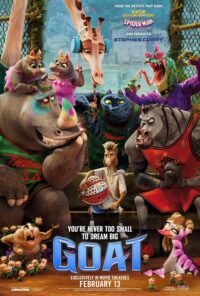
Finally, a quick word on two films that are the product of a simple “what if” question. Firstly, “What if a goat was an actual GOAT?” That stands for Greatest Of All Time and it would appear that in the world of sports you can have many of them simultaneously.
In Tyree Dillihay’s GOAT, anthropomorphic animals play a game called Roarball which is basically basketball but where home advantage counts quite a lot – lava, ice, etc. Larger animals dominate in Roarball – and its pleasingly mixed-gender in terms of roster – but when the perennial second-bananas the Vineland Thorns need a ring-in, the owner (Gabrielle Union) recruits a “small” who has made a splash on social media. Orphan goat Will Harris (Caleb McLaughlin) has been practicing for years to make his late momma (Jennifer Hudson) proud by making it to the big leagues.
Of course, his path to the championship (called “the Claw”) will not run smooth and he will face professional jealousy, corporate malfeasance and downright cheating along the way.
There is absolutely nothing that’s original about this film apart from how it looks and how it sounds but they are original enough to make GOAT a fun film. The voice work is great, the art is reminiscent of Sony’s Spider-Verse films while still being its own thing and the music choices land perfectly, including yet another run out for Crowded House’s “Don’t Dream It’s Over”. The New Zealand government should just go ahead and nationalise that song so we can all benefit.
Watching GOAT, I was reminded that no matter what white supremacists and Euro-fetishists like Vance, Rubio and Trump have to say on the matter, the only uniquely American contribution to global culture comes from African-Americans. And if they weren’t dumbasses they would be proud of that.
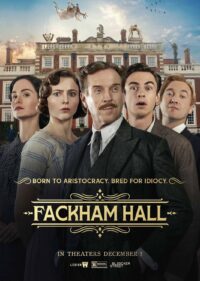
Fackham Hall is the result of a single question – “What if there was a film called Fackham Hall?” – and that really was the beginning, middle and end of the development process. Purportedly a parody of English upstairs-downstairs dramas like Downton Abbey, the poor actors (including Kiwi Thomasin McKenzie) are hung out to dry by a truly terrible script and non-existent direction.
They know that this sort of thing is best played Leslie Nielsen-style deadpan but if there’s no actual joke sitting behind it we’re all left sitting in embarrassed silence.
- I interviewed Park back in 2013 for the Cinematica podcast and learned that he was to be addressed formally as “Director Park”. ↩︎
