
Back in the early months of 2020, I was filling in for Simon Morris on RNZ’s At the Movies and – because of the lockdowns – my topics were restricted to films we could all watch at home.
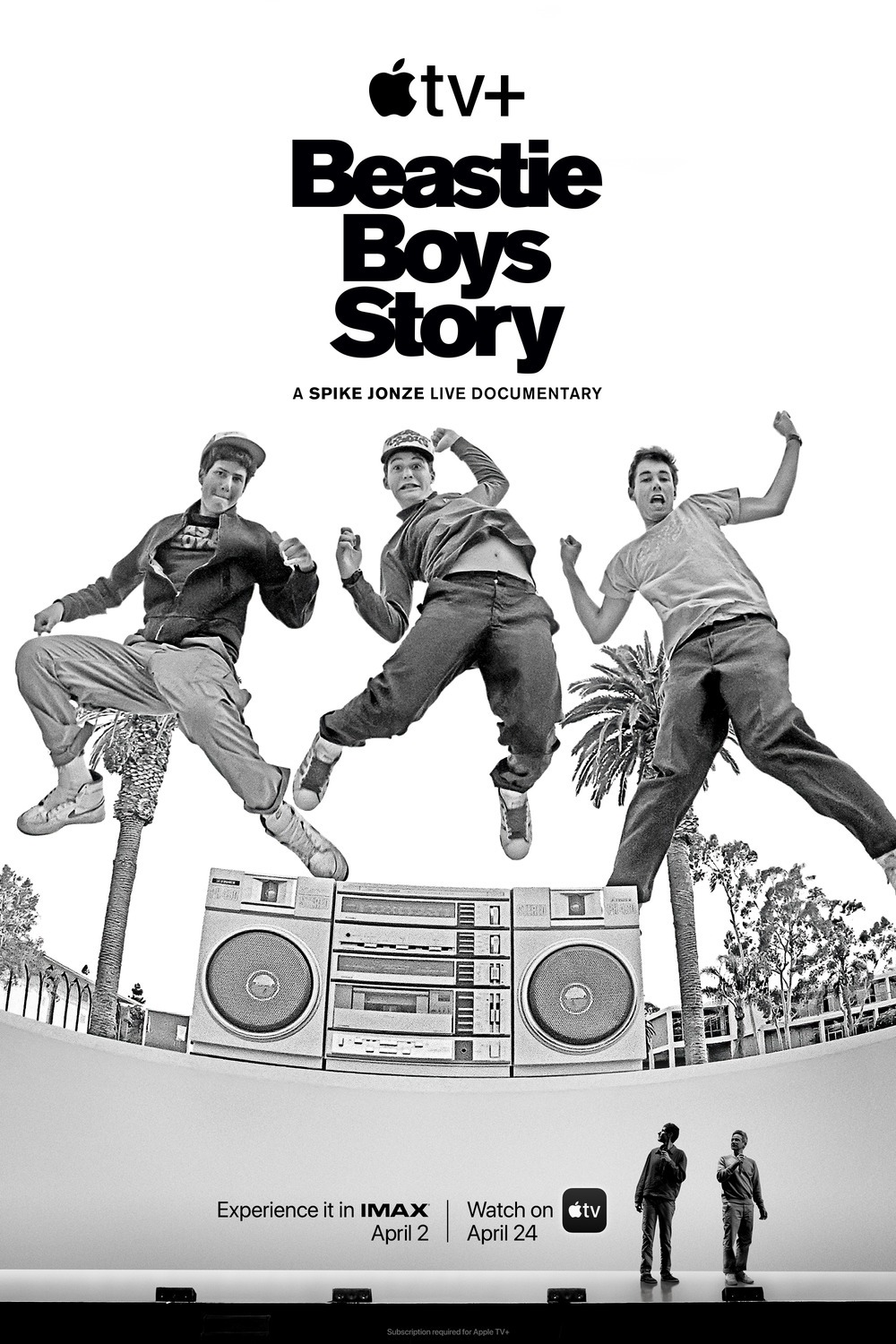
On 29 April that year, I reviewed the Chris Hemsworth action flick Extraction, animated family film The Willoughbys (both Netflix) and the Apple TV+ documentary Beastie Boys Story. Those first two I had completely forgotten until typing their names out just now but the Spike Jonze collaboration with the two remaining Beasties has lingered longer:
Music documentaries don’t tend to be the most experimental of art forms. Frankly, they can often be a bit samey. Interviews with talking heads, cut alongside archive footage that illustrates the incidents they recall – concerts, studios, contracts, drugs – it’s nice to come across a film that tries to take a different approach.
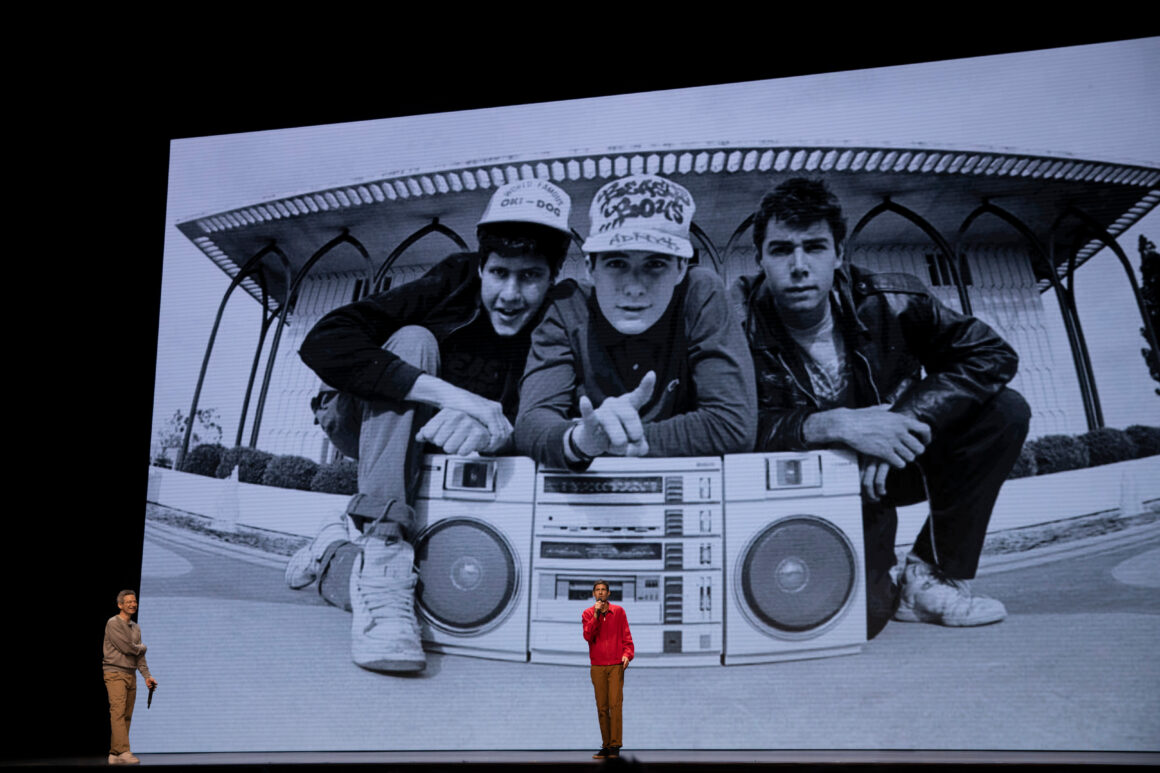
In Beastie Boys Story, just arrived on Apple TV+, the subjects are all the same – concerts, studios, contracts, drugs – but the format prioritises the voices of the group themselves rather than commentators or other witnesses.
The film is essentially a filmed live performance, not of the Beasties in concert because as Adam Horowitz (aka Ad-Rock) says, they ceased to be a band when the third member, Adam Yauch (“MCA”) died of cancer in 2012. It’s a spoken word reminiscence, designed to be filmed but also designed for a live audience, and designed to bypass the usual gatekeepers of a band’s story. This is defiantly first person but, to the remaining Beasties’ credit, it’s a story told with considerable insight and humility.
The Beastie Boys grew up in a New York music scene that was centred around the largely white boy world of what Americans call Punk Rock. That was a musical style that was a kind of distilled essence of the UK punk scene but it didn’t take the Beasties long to realise that there was an arguably more vital, and certainly more indigenous, music scene right on their doorstep.
Hip hop did not come easily to the Beastie Boys but they were nothing if not game and it is thanks to the self-interested guidance of Def Jam’s Russell Simmons and the single-mindedness of producer Rick Rubin that that first album tore up the charts in 1986. Everyone in the business knew that a white rap group was going to be a license to print money and so License to Ill was born.
The Beastie Boys Story stage show and the resulting film is directed by Spike Jonze, collaborator on many of the Beasties most memorable mid-career videos, like for the song Sabotage that we heard about a little earlier.
Jonze is something of a prankster himself, the director of frankly not enough feature films but including Adaptation, Being John Malkovich and Where the Wild Things Are and there’s a looseness about the Beastie Boys Story that reflects the fact that neither he nor his Beastie friends have ever taken themselves too seriously.
At least not since they got off the Licensed to Ill treadmill back in 1987, when they realised that the trap of a management Svengali and a guru producer was only going to hold them back creatively.
For dedicated fans many of these stories won’t be new but I’m not one of those people so the even-handedness and willingness to share credit and blame – even when detailing how they were ripped off as naïve young musicians was one of the pleasures of Beastie Boys Story.
I’m not going to pretend to you that Beastie Boys Story is one of the classics of the rock biopic genre. Its insights are more about what it’s like to look back on these young and restless versions of yourself from the position of a comfortable middle-age rather than detailed chapter and verse stories about how songs and sounds came to be – although there is a little of that.
Some of the most interesting moments in the film are bits that a more detached director might have missed. It’s ultimately about a lifetime of friendship, that recognition of when you didn’t always do right by the people you love but that you want to make it up to them now, if it isn’t too late.
Finally, I recommend you watch this film right to the end because many of its greatest pleasures and surprises arrive after the final credits have finished. I’m not sure whether watching streaming films at home encourages sitting right through the credits or not – Netflix makes it almost impossible – but it’s still something that we1 like to do and I think it’s worth it this time.
If you prefer to listen rather than read, you can do so here – you’ll get the benefit of several clips from the film at the same time.
Where to watch Beastie Boys Story
Worldwide: Apple TV (formerly known as Apple TV+)
Editor’s note
I’m still well behind on writing up new and current releases, sorry, but you can always listen to my most recent appearance on RNZ Nights with guest host Susana Lei’ataua. Topics covered include Bernard Herrmann’s birthday, Supergirl, One Hundred Years of Solitude on Netflix and British panel game Would I Lie to You?
- That would be the editor-in-chief and myself. ↩︎

… liked this!