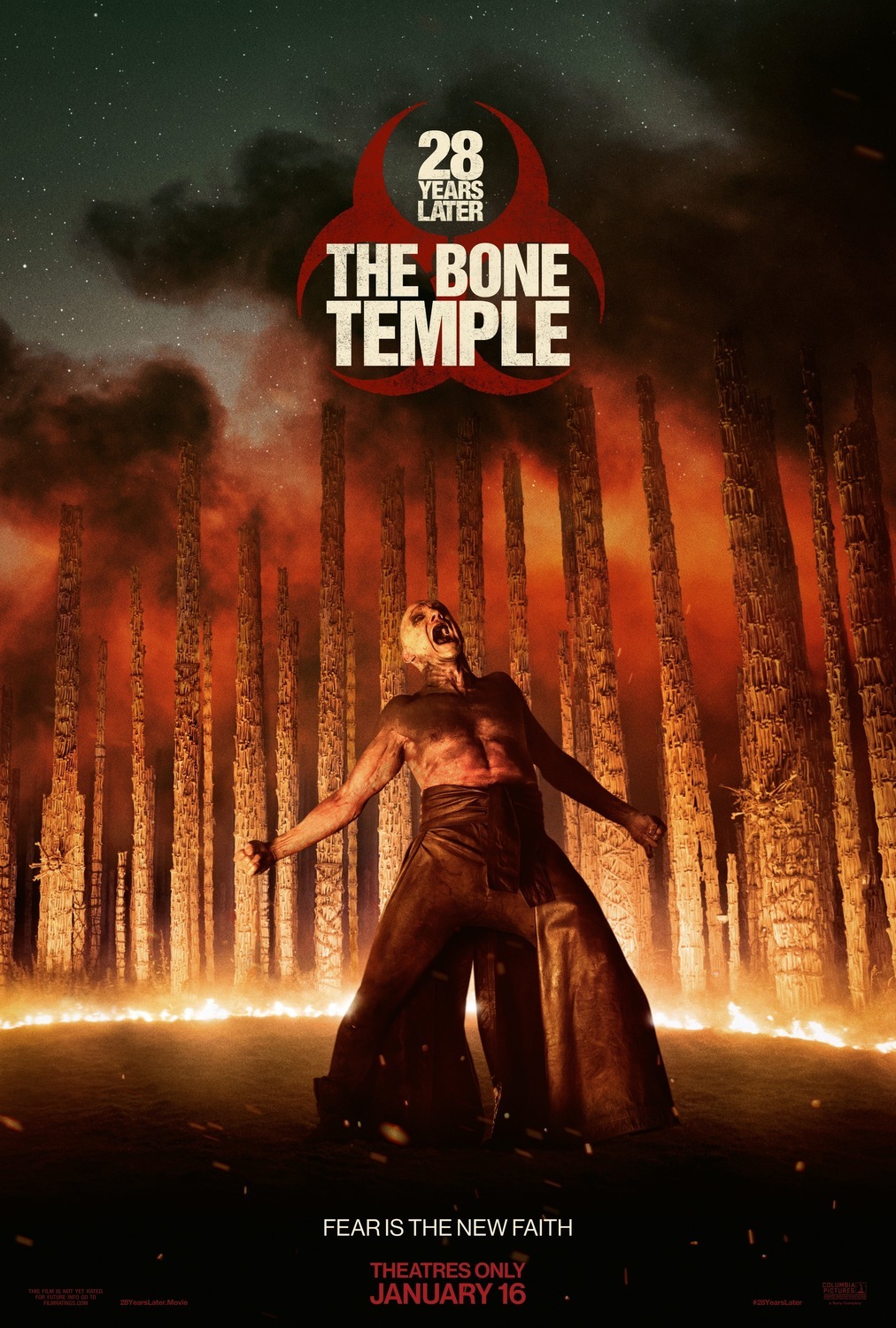
Last year’s restart of the 28 Days Later story, 28 Years Later could be read from some angles as an allegory for Brexit — a lonely Britain, forcibly isolated from the rest of the world because of its poor choices. If the moral of 28 Days Later was “Be careful what you wish for” then the new instalment, The Bone Temple, could be saying, “Be careful what you pray for.”
Nia DaCosta (The Marvels, Hedda) takes over the director’s chair from Danny Boyle for this episode but Alex Garland (Civil War, Warfare, The Beach) remains firmly in control of the screenplay.
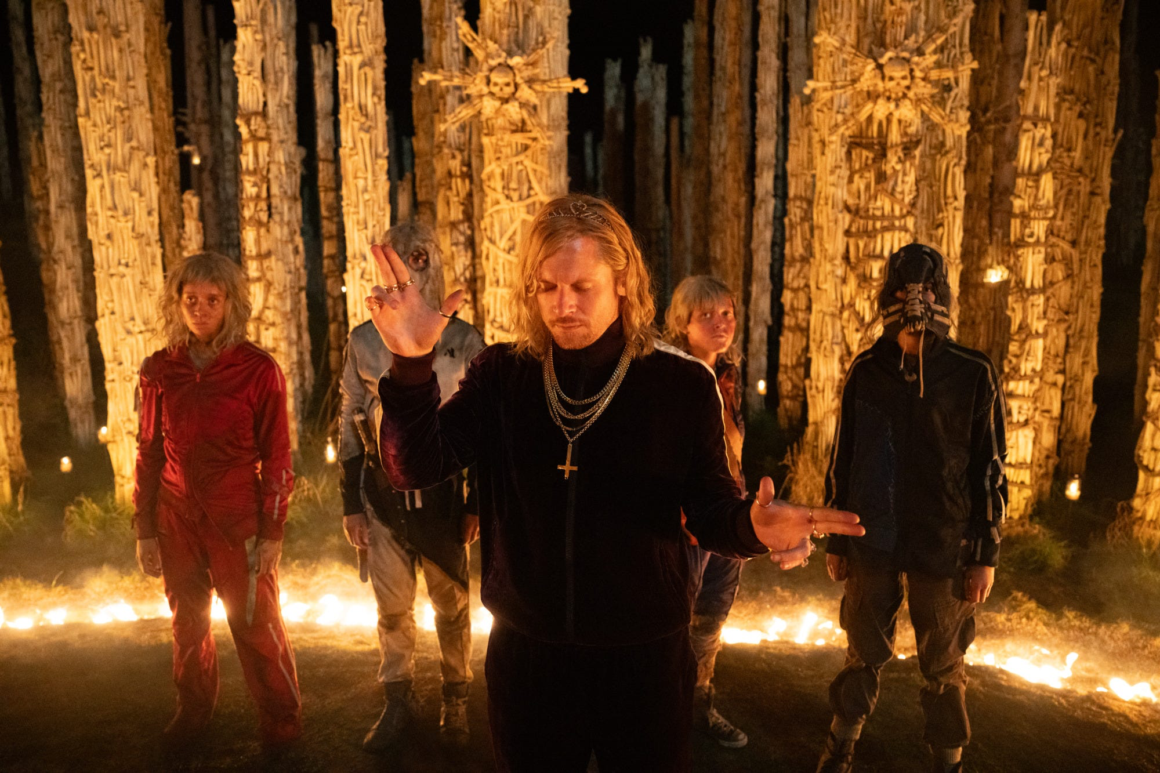
The film starts immediately after the conclusion of the previous one — and like Avatar: Fire and Ash it offers zero concessions to audience members who didn’t see its predecessor1 — as brave young Spike (Alfie Williams) has been captured by the Jimmies gang and is undergoing an initiation of sorts. Led by Sir Jimmy Crystal (Jack O’Connell), the Jimmies are uninfected by the virus but totally infected by the trauma, modelling themselves on the most evil Englishman of the 20th century, (Sir) Jimmy Savile. There can be only seven Jimmies so Spike can only survive this encounter by ending one of the others, something that as an 11-year-old he is ill-equipped to do.
A stroke of luck intervenes and Spike unwillingly joins the Jimmies on their rampage across Northumberland, eventually coming across the kind and decent Dr. Ian Kelson (Ralph Fiennes, who we met in the previous film) and his remarkable ossuary. With the help of prodigious amounts of opiates, Kelson has managed to befriend one of the infected — a giant ‘alpha’ who he names Samson — and is learning something about the virus that was previously undiscovered2.
To save himself — and his research — from Crystal, Kelson must take on a kind of role play to hoodwink the rest of the Jimmies but Crystal’s position is also at risk without this pact with “the Devil”.
There are sequences in The Bone Temple that are so gruesome that even hardened genre fans have reportedly had to leave the auditorium but I managed to shield my eyes from the worst of it. (I don’t want to speculate on what goes on in Garland’s head but I can say that the most disturbing film I’ve seen in the last ten years is his Men3.)
But The Bone Temple has green shoots of optimism about it, suggesting that while supposedly healthy humans can be capable of as much destruction as the infected, there might be enough of the good ones still left to see us through.
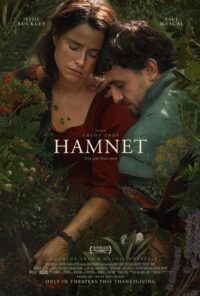
Chloé Zhao’s adaptation of Maggie Farrell’s bestselling novel Hamnet has divided critics and audiences. There’s a ‘love it’ or ‘hate it’ scenario out there so I I’m a bit out of step when I confess to not feeling very much at all.
My biggest problem isn’t with the heavy emotional pull of the grief inflicted on its characters — thanks to leads Jessie Buckley and Paul Mescal, I found those depths to be honest and believable. My problems are more to do with not being in much agreement with the intellectual thesis of the film — that the death of William Shakespeare and Anne Hathaway’s son, Hamnet at a young age prompted the playwright to produce the greatest play in the English language (if not the whole world).
And it’s not even that I don’t agree with the thesis necessarily, it’s that the film fails to make an adequate case for it, requiring a wilful misreading of Hamlet the play in order to make it a treatise on a specific loss while the play ends with a stage strewn with unmourned corpses4.
There’s something moving about using fiction as a tool to help a loved one move through the bardo to the next place, and to give comfort to those left behind but this is not the play that does that.
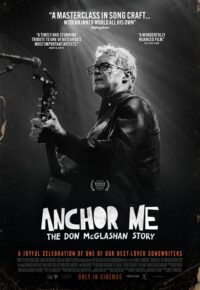
Younger readers might know Don McGlashan only as the hero who told Chris Bishop to “Shut up, you dickhead!” at the recent Aotearoa Music Awards, so they might be surprised to know that he’s been an influential music artist in New Zealand for nearly 50 years. His story is told — in pretty straightforward linear fashion — in Shirley Horrocks’ documentary, Anchor Me: The Don McGlashan Story.
It feels like an unnecessary quibble to want a bit more drama out of a documentary— Mr. McGlashan has led a mostly happy life, burning few-to-no bridges in the process, but he’s no less entitled to having his achievements recorded because of that. He’s been a keen observer of pākehā New Zealand life, telling compelling stories in song, and at his peak his ear for a catchy melody was unparalleled.
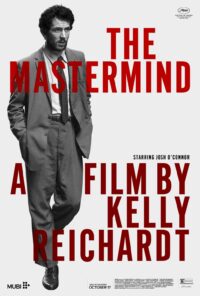
Josh O’Connor appears to be having the kind of career that Adam Driver had before he made it to full-blown movie star status. He’s working a lot, with interesting directors, and showcasing a considerable talent. (He’s also not conventionally good looking but I’m sure that’s just coincidence.)
In Kelly Reichardt’s The Mastermind he plays an unemployed cabinet maker in a sleepy Massachusetts town in 1970. With a breezy overconfidence combined with a lack of actual criminal aptitude, he decides to steal some paintings from the local municipal museum. From the beginning, things start to go wrong. He didn’t know that it was teacher only day at the school so he has to look after his two sons. His getaway driver bails at the last minute so he has to take on the job himself. And one of his accomplices decides to start waving a gun around during the daytime heist.
With no apparent plan for what to do with the paintings once he’d stolen them and the heat bearing down, he ends up splitting on his family and going on the run. As he gets further into the interior of America, real-life concerns, especially the Vietnam War, start to make themselves known.
Indeed, I think of The Mastermind as an allegory for America in that period, getting involved in illegitimate adventures with no plan for the aftermath — several people to say to O’Connor’s character during the film, “You didn’t really think this through, did you?” — but his sense of entitlement and self-actuation trumps the possibility of good decision making5.
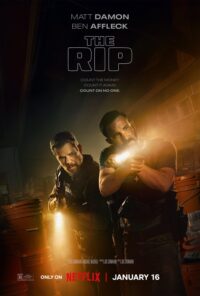
The Rip is an entertaining cop drama from writer/director Joe Carnahan but its biggest impact should be as a state of the art demonstration of Netflix’s DolbyVision and Dolby Atmos technologies. Shot mostly at night, I’ve seen people complaining about how dark it is, but if you have a DolbyVision-enabled screen you’ll catch everything in the shadows and the colours will pop superbly. And if you have enough speakers the first big shootout will have you ducking for cover as the bullets fly all around you. I’m a big proponent of physical media — as you know — but I can’t imagine a UHD disc looking and sounding any better than this.
Oh, the film? Matt Damon and Ben Affleck play cynical Florida cops who are tipped off to a vast amount of money behind the drywall of a suburban house. The rules say they have to count it then and there and hand it over to their bosses. But what if, you know, you just didn’t? Somebody in their team is a snitch — and it could be either of those two — and they have to find the rat and decide what to do with the money before the Cartel comes looking for them.
Solid, but altogether too much swearing. Maybe you shouldn’t use it as a demo then …
- I’m not sure about the strategy here. If, say, 15% of the people who watched the last film didn’t enjoy it and you aren’t going to pick up another 15% of new audience to replace them because you make no concessions for them, aren’t you guaranteeing a smaller box office than before? Or does word of mouth grow the whole franchise over the long haul? ↩︎
- It won’t happen because The Bone Temple is a genre movie and it’s being released too early in the year to be remembered in a years time, but Fiennes absolutely deserves some awards recognition. ↩︎
- Men wasn’t a film that I ever felt up to reviewing — despite its hold on my psyche — as I couldn’t imagine any of my readers, listeners, friends or relations willingly putting themselves through it. ↩︎
- The production of the play in the film — opening night of the première season apparently — does what so many other productions have done which is to treat Fortinbras as an inconvenience and ignore him altogether. ↩︎
- I liked the film a lot but the editor-in-chief has very low tolerance for characters who are unable to see or do what’s best for themselves. ↩︎