Films about rules abound this week, or at least films that rely heavily on rules, sometimes to their cost.
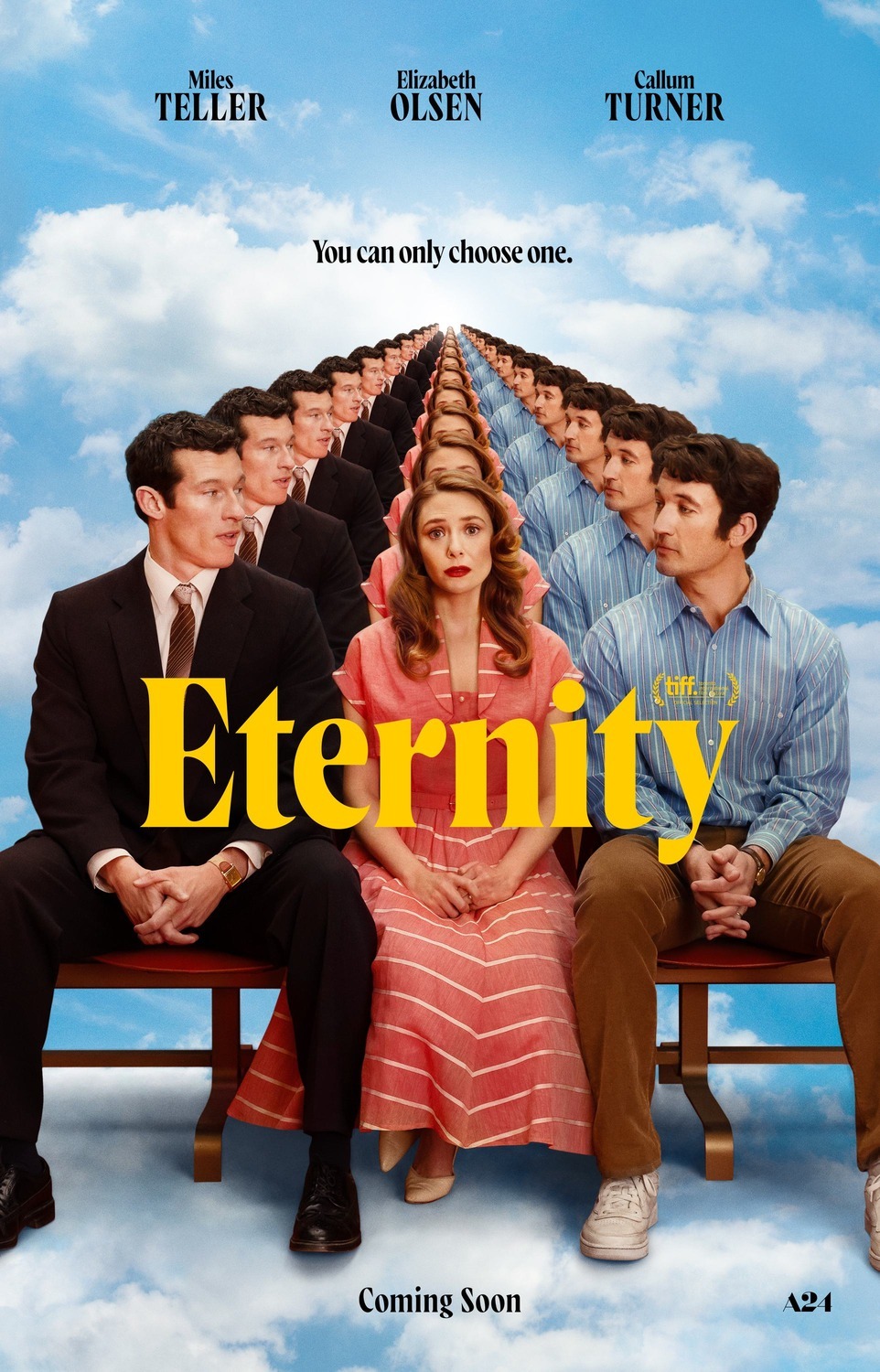
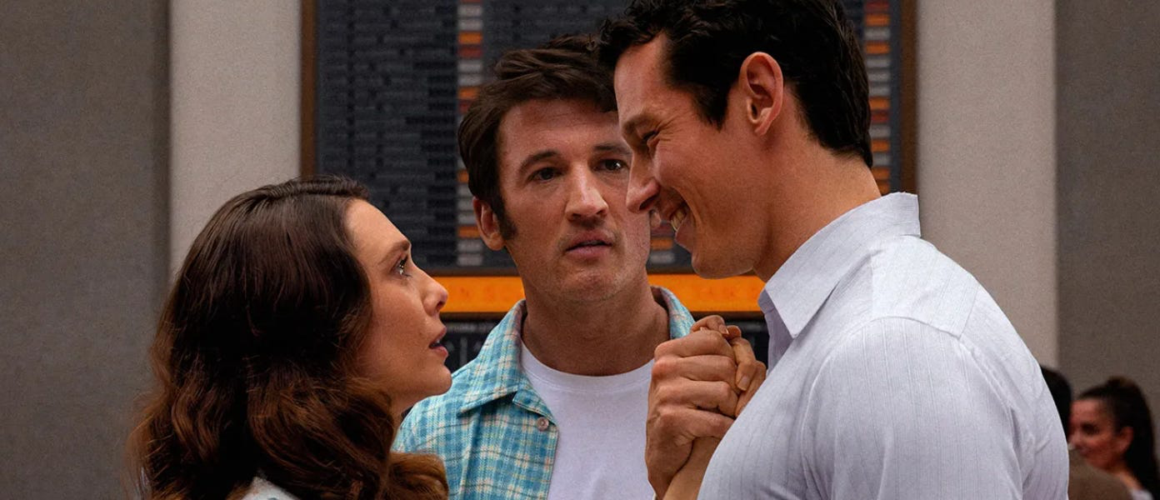
The most arbitrary set of rules can be found in David Freyne’s Eternity which sets up a convoluted and illogical collection purely to try and raise the stakes of a classic screwball love triangle to breaking point.
First rule: everyone who dies goes to a holding pen that looks like a cross between a railway station waiting room, hotel lobby and convention centre in trade show mode. This place is called The Hub and everyone gets to spend seven days there adjusting to their new reality and deciding where of the many resorts/lifestyle choices we get to spend forever.
Second rule: Seven days appears to be a minimum. If you can’t decide after a week, you can choose to hang around The Hub but you have to make yourself useful.
Third rule: Everyone gets to choose an eternity experience. Even Hitler can lie one a beach forever if he wants to. This rule is made explicit early on solely to pre-empt any questions about whether this is heaven or not. No judgement, no awkward questions, let’s just quickly move on.
Fourth rule: If you change your mind and leave the experience you have chosen, you will be banished to a void, to nothingness. This seems harsh but, again, the rule is there to artificially increase the stakes for the characters, not to provide any philosophical consistency.
Old man Larry (Barry Primus) chokes on a pretzel at the gender reveal party for his new grandchild. Knowing that his cancer-stricken wife of 65 years, Joan (Betty Buckley), is not long for our world he elects to stay at The Hub until she can join him and they can decide where to go together.
Fifth rule: You will spend eternity in the body you were happiest in. This allows for our central couple to be played by Miles Teller and Elizabeth Olsen.
What Larry doesn’t realise is that Joan’s first husband Luke (Callum Turner) — who was killed in the Korean War — has been waiting 67 years for Joan to arrive and wants to pick up where they left off. The two men have entirely different visions for where they want which Joan away to and — I now realise that this might be a more conscious attempt to reflect their generational attitudes — neither seems terribly bothered about what Joan herself might want.
At no point does anyone consider that someone might want to spend the afterlife alone or with someone other than a spouse. Larry asks how the kids are doing but no one has any interest in, maybe, waiting for them to turn up so the family can be together again.
Eternity is a classic example of a tortuous scenario departing swiftly from logic and never returning, just so two egotistical men can bicker over a woman. There’s decent chemistry among the characters (Olsen is perfect) and the look and feel of the thing works well, but it’s a philosophical question that no one has been crying out to have answered.

The rules of Five Nights at Freddy’s 2 might be more apparent to fans of the video game (or people who paid more attention to the first film) but they felt just as ‘make it up was you go along’ as in Eternity.
The haunted animatronics of the first film or missing presumed broken and the pizza parlour where they wreaked their havoc is even more abandoned. Luckily, we discover that it was just a franchise of the original Freddy Fazbear’s where there are more of these spooky machines, if only the film could find a way to get there.
Which Scott Cawthorn’s script does, along with all sorts of other useful things — wireless control of the animatronics that works across the city along with handy geolocation technology, all invented back in 1982 apparently — to provide a horror story that the kids of today will buy1.
Too stupid for words.

Nuremberg is about justice so courtroom rules are appropriate — and comprehensible and historically accurate — in this case.
At the conclusion of World War II’s European campaign, lots of Nazis had missed the opportunity to take the easy way out via suicide. The Allies were torn between summarily executing them as war criminals or trying something a bit more elevated. Supreme Court Justice Robert Jackson (Michael Shannon) is tasked with working out whether these men could be tried in a courtroom — evidence was just emerging of the Holocaust atrocities and this would be a way to have it become historical record for the rest of the world to know about.
Herman Göring (Russell Crowe) was the most senior Nazi left alive and there was concern that giving him a platform might elicit sympathy instead of contempt. It was a high-wire act for prosecutors who had never done anything like this before, and James Vanderbilt’s film hews closely to my understanding of what actually went down.
Back in October, reviewing the epic British documentary series The World at War, I said that the young people of today really need to know what happened in the concentration camps and that the Holocaust was real. I’m pleased to say that Nuremberg spends quite a bit of time in its final third doing just that, using the same archive film footage, the only problem being that the kids of today will be climbing the walls with boredom before we ever get there.
The film is mostly interested in the long battle of wits between the narcissistic Göring and his court-assigned psychiatrist (Rami Malek), the underlying question being, were the Nazis monsters or were they just like us. Or rather, are we just like them, equally capable of atrocities in the wrong circumstances?
The best scene doesn’t feature Crowe. It’s between the U.S. Army translator (Leo Woodall) who has been assisting Malek throughout as he reveals his own connection to the whole awful business.
I reviewed Bolero back when it was part of the French Film Festival in May this year:
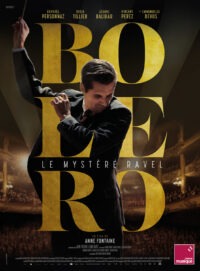
Much more frustrating to try and follow is the musical biopic Bolero, about the creation of the famous piece of music by early 20th century composer Maurice Ravel (Raphaël Personnaz). The opening titles make innovative use of the piece’s ubiquity since its debut in 1929 but you may end up becoming as sick of it as the actual Ravel was before the film ends. Bolero is only 17 minutes long and I feel sure we heard the whole thing multiple times, despite Ravel himself suggesting that the piece “contained no music”.
The long sections of the film devoted to Ravel scratching out notes – either in his study at the piano or in his (real-life) garden, only confirmed to me what I’ve always thought about composing music. That the composer simply finds a note that they like and then tries every other note – one after the other – until they find one that goes with it, and so on and so forth.
(There’s more including reviews of The French Job and How to Make a Killing.)

Finally, Noah Baumbach’s Netflix vehicle for George Clooney, Jay Kelly, doesn’t even follow its own rules, or perhaps it doesn’t concern itself much with internal consistency, drifting between tired old Hollywood behind-the-scenes satire, absentee father tropes and some occasionally insightful observations about what happens when someone sells their soul for fame and fortune.
Jay Kelly is an ageing top rank movie star. He goes nowhere without an entourage (co-writer Emily Mortimer on hair, Laura Dern on PR and Adam Sandler is his long-suffering manager), affects an air of being an everyday human when he has entirely forgotten what that’s about and he’s realising — after far too long — that he misses it.
Clooney is aways watchable, of course, but Sandler steals the film even if he doesn’t need very deep pockets to do so.
- Which they are. My screening was well attended and the film ends with three separate confirmations that the franchise will continue. ↩︎