Deadpool & Wolverine and Horizon: An American Saga - Chapter 1 are in cinemas and Young Woman and the Sea is streaming on Disney+
Firstly, an update on yesterday’s post about The Chills: The Triumph and Tragedy of Martin Phillipps. Since we went to press (press?) DocPlay in Australia and New Zealand announced they were making the film available for free until 5 August.
Reader JR of Auckland emailed to let me know that the film is also streaming for free on Māori+ which was a reminder that I need to check in there more often.
I also need to apologise to old pal Stephen Ure whose name I spelled with a ‘v’ in my recommendation of Deathgasm on Friday. The error is regretted.

New Zealand readers will be aware of the release last week of the recent Royal Commission into Abuse in State and Church Care. It details a heartbreaking and scandalous history and challenges the nation to do better – for those that suffered and those still to come.
Somehow I was reminded that the last Deadpool movie featured Russell (Julian Dennison), a young Māori character whose trauma and abuse in an orphanage prompts him to use his nascent mutant powers to lash out and cause indiscriminate destruction. In the end, it is only a gesture of self-sacrifice from Wade Wilson (Ryan Reynolds) that turns the kid around and shows him that someone cares.
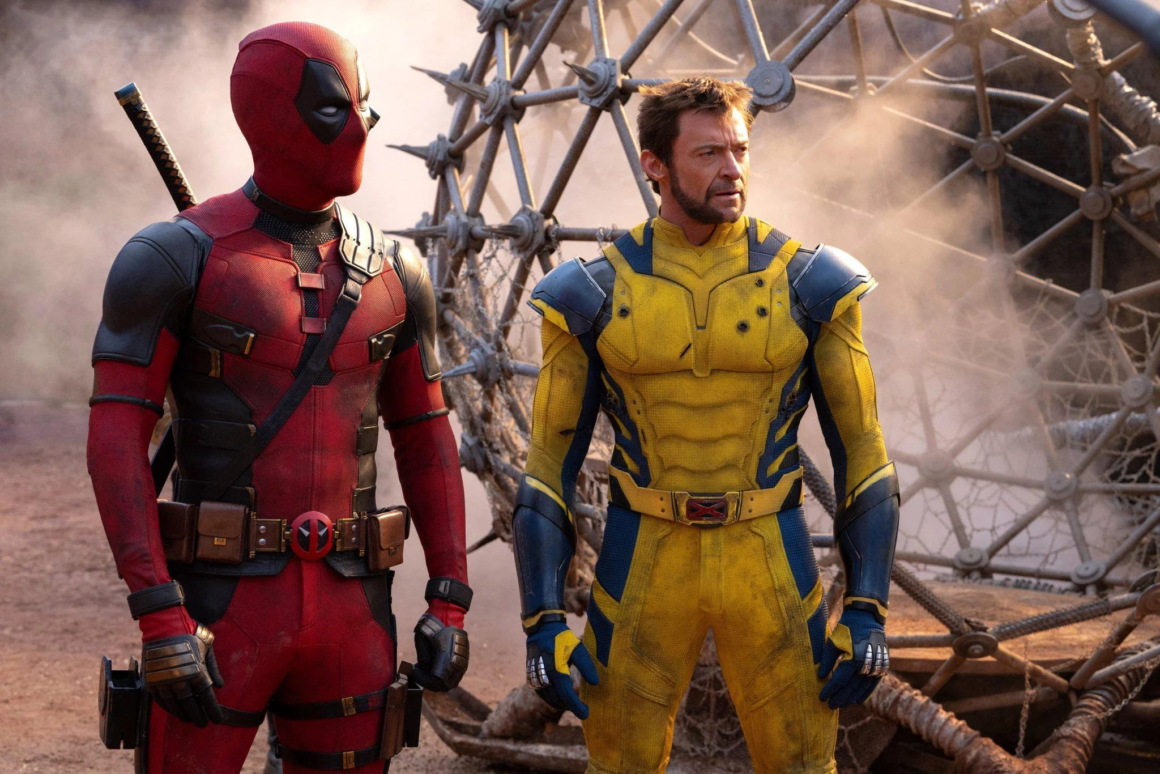
There’s nothing that thought-provoking in Deadpool & Wolverine.
But I’m finally giving in and learning to judge these Marvel movies on a comic book curve rather than a motion picture one. Things that are important to me as a film lover – like endings – are meaningless here. In comic books, endless reboots and retooling, parallel universes, ret-conning timelines aren’t problems, they are the point.
The problem for traditional audiences like myself is that the stakes are different now. If a character can never really die, then the drama becomes about how they are resurrected not will they survive. And the resurrection in D&W is almost entirely arbitrary.
In the Disney+ series Loki, Tom Hiddleston’s trickster Norse god both redeems and discovers himself through his ultimate sacrifice and it was actually quite meaningful. These guys just turn up again – after we have seen them destroyed in a ‘selfless act of saving the world’ – telling us that when they hold hands they are basically indestructible and asking us to believe them.
A gag early in the film is Deadpool calling himself “Marvel Jesus”, as if he’s coming to save the MCU, but what is the point of Jesus if everyone can be resurrected?
(It is a little bit clever that after Deadpool/Wade telling us through the entire film that he wishes to “matter”, it is matter – and anti-matter – that gives him what he wants.)
Apparently, Deadpool and Wolverine was shot in only 39 days – the shortest shoot in Marvel history – and I’m sorry to say it looks like it. If, like me, you loved the beautiful attention to detail given to the Time Variance Authority sets in the Loki series, you’ll be disappointed at how cheap and crappy it looks in this film.
It’s as if all the money went on Jackman’s pension fund (or paying for his divorce?) and none of it on Marvel’s traditional production values.

This may be a reference that both ages and locates me but in one-day cricket the purpose of the first 90 overs is simply to set the conditions for the final ten. It’s the same for the first four days of a test match. It grounds and defines the final drama and, while we all hope that there is some entertainment value to be had from that, it’s a bonus.
This is also the purpose of Kevin Costner’s Horizon: An American Saga – Chapter 1, which is almost three hours of gorgeous scene setting, the grand serenity of Monument Valley in Utah regularly shaken up by violent human drama over the future of the frontier.
Costner – perhaps inspired or challenged by his participation in Taylor Sheridan’s epic Yellowstone franchise – has mapped out four feature films worth of story. Sadly, for those of us that enjoyed this first instalment, the rest are unlikely to be seen in cinemas (or possibly at all in the case of parts three and four).
The film introduces us to several converging storylines featuring multiple characters, some of whom just disappear (which is a little bit more like life than most films if we’re honest).
The content below was originally paywalled.
Costner’s visual storytelling is strong. Unlike the film below, he doesn’t need to spell everything out for us multiple times, but we get the sense of who everyone is and why they are headed to the recently established, but fragile, Arizona township of Horizon.
Like Wellington’s own colonial project, hundreds of plots are sold to people desperate for a new life in a new country by someone who had never been there. And, like Wellington, the “indigenous” don’t take kindly to this intrusion.
Costner understands that one of the keys to a Western is that the landscape dwarfs all the humans in it which is an effect that will be far less powerful when we end up watching the next part on TV.

I read an article the other day that featured a producer on several recent streaming shows pointing out that they were being consciously asked to make “second-screen” content. By that they meant, television that was going to be consumed mostly by people doing something else, much like my mother would do the ironing in front of the TV back in the day.
Successful second-screen material has to assume that people aren’t listening properly at the same time as they aren’t watching properly, so stories have to repeat key plot points several times to ensure that they land. It’s as if everything now is like the scenes before and after the credits in a reality home renovation show – here’s what’s coming next, here’s what you’ve just seen!
This describes Young Woman and the Sea to a fault, nothing is worth saying that can’t be said more than half a dozen times – ‘the shallows, beware of the shallows, we can’t follow you into the shallows!’
Other than that frustration, it’s an uplifting (true-ish) story. Trudy Ederle (Daisy Ridley) is a fiercely competitive swimmer from a German immigrant New York family. Frustrated by the lack of opportunity and support, she decides to become the first woman to swim the English Channel.
The film comes to life when it – like Ederle herself did on the crossing – takes an unexpected 90-degree turn and introduces a new coach, Bill Burgess played by Stephen Graham. The working class showman replaces the villain of the piece, Christopher Eccleston’s Jabez Wolffe, whose lack of belief in Ederle manifests itself in sabotage.
If you liked Clooney’s The Boys in the Boat from earlier this year (and we did), you’ll enjoy this sporting overcoming-the-odds story set in a similar era.