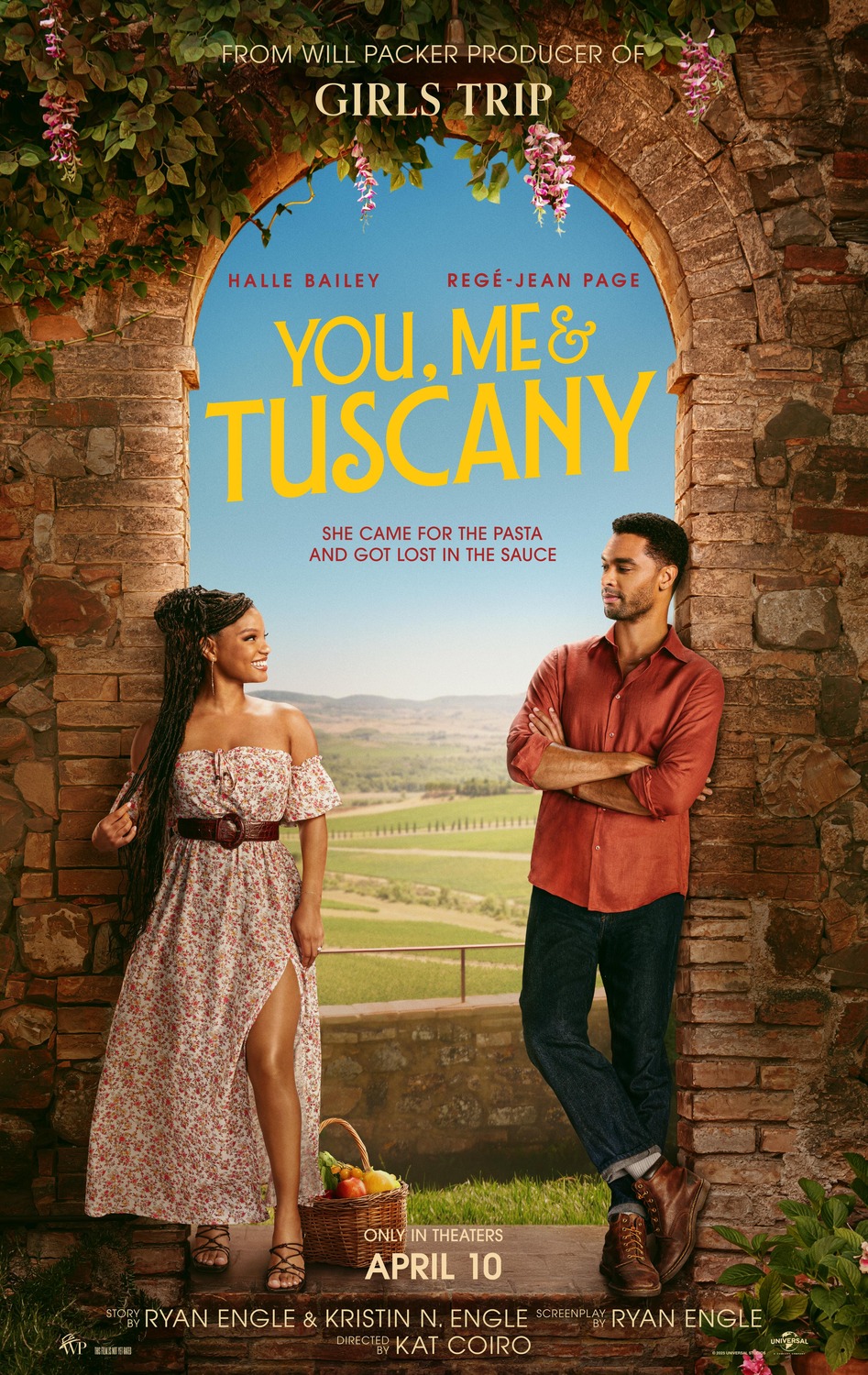
At the end of the credits for You, Me & Tuscany there’s a stern warning that the film may not be used to train any AI model, which would be praiseworthy were it not for the fact that the film itself already appears to be have crawled out of one.
One of those ‘American discovers themselves and finds love thanks to beautiful European country and crazy European people’, it is so tonally inspired by My Big Fat Greek Wedding that it’s creator, Nia Vardalos, makes a cameo appearance to show her approval.
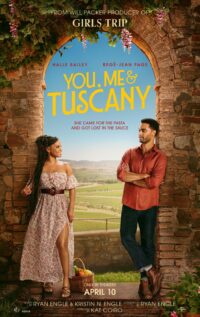
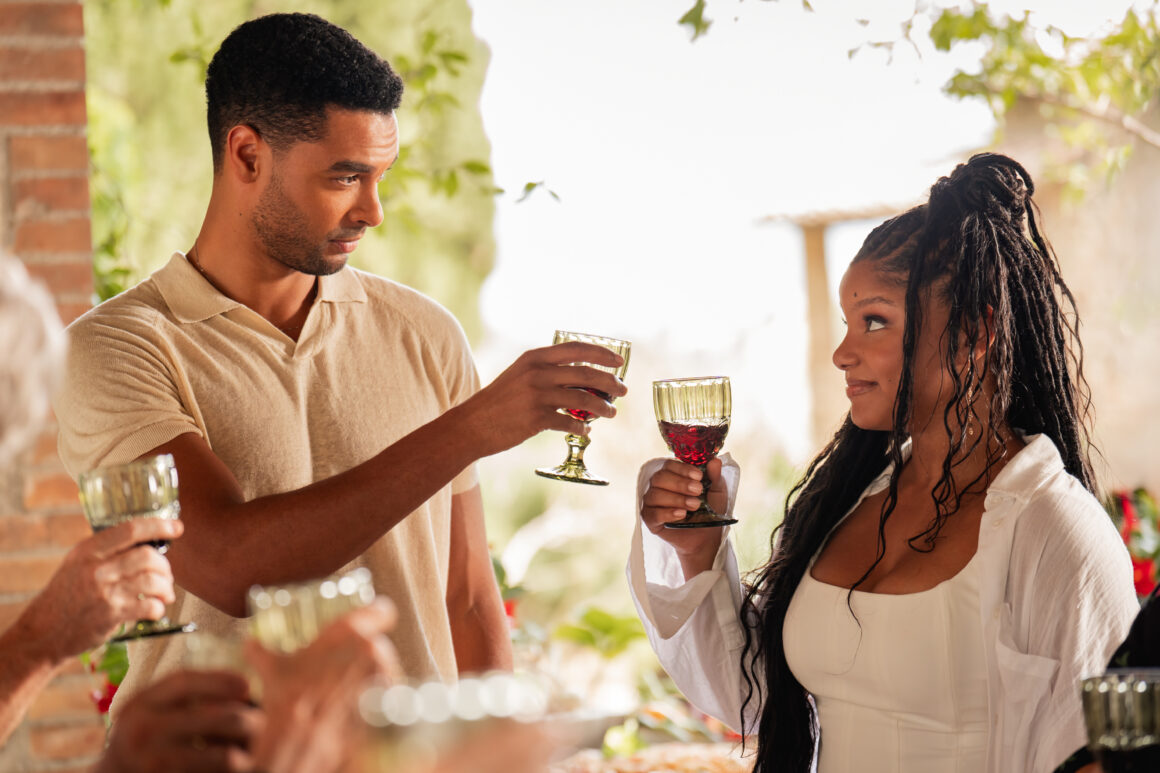
Halle Bailey (The Little Mermaid, The Color Purple, but not the good versions of either of those films) plays Anna, a young woman who is reeling from personal tragedy by making irresponsible personal decisions – to the frustration of sassy best friend Claire (Aziza Scott). Down to her last working credit card, Anna befriends a handsome Italian real estate something-or-other in a hotel bar, discovers that he has fallen out with his family and left his Tuscan village home, never to return. There’s a beautiful villa, just sitting there empty. Why shouldn’t Anna go and live in it for a while until she has sorted herself out? At least, that’s what Anna thinks. Matteo (Lorenzo de Moor) has passed out on the bed thanks to a combination of liquor and jet lag.
It’s not long before Anna is discovered in Matteo’s luxurious home and makes up a story about being Matteo’s fiancée, instantly making his family happy, both at the impending wedding and about the fact that he will shortly be coming home.
Heartthrob Regé-Jean Page (Bridgerton) plays Michael, Matteo’s winemaker cousin-slash-brother. The precise relationship between the two men is clumsily handled, because the filmmakers don’t really want to explain why Michael is black in a white Italian family and why he has an English accent but also speaks perfect Italian, while at the same time they want his handsome black-ness to be notable for Anna and Claire but invisible to everyone else1.
It won’t amount to spoilers for me to say that Anna melts Michael’s all-business heart – the film eventually lets her sing – and Michael prompts Anna to come clean about the truth of her non-relationship with Matteo. On the way, we get plentiful rich-people consumption porn (including Maserati product placement) and Anna demonstrating her dormant cooking skills to save the day in the family’s restaurant.
A crowd-pleasing film for the easily pleased, there was even some applause at the screening I attended. Maybe for Regé-Jean’s eight-pack.
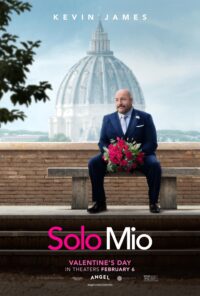
If that particular version of ‘wounded American healed by Italy’ isn’t enough for you, in Solo Mio Kevin James (Paul Blart: Mall Cop) is jilted at the altar in Rome and persuaded to do the honeymoon vacation package alone. Two other American couples on the same tour try and help him get over things but it’s the owner of the local coffee shop who proves that he has a future.
Mostly maudlin – and with an awkwardly old fashioned attitude to gender – Solo Mio features some teeth-grindingly awful coincidences and an inexplicable cameo appearance by Andrea Bocelli. James has made his mateship with Adam Sandler go an awful long way and his sad sack performance wears thin early on and doesn’t improve. What these women see in his character, I can’t for the life of me work out.
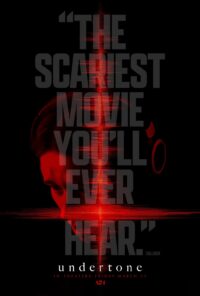
The most interesting things about Canadian horror Undertone are the circumstances of its making. Writer-director Ian Tuason was the solo caregiver for his parents while they were simultaneously dying of cancer during Covid and he turned that experience into a low-budget chiller that he shot in the family home where his parents died.
Podcaster Evy (Nina Kiri) is alone with her comatose mother, hoping that the end won’t be too painful and drawn out. Some mysterious audio files, sent by her co-host, spark incipient paranoia as the fear, loneliness, insomnia, substance abuse along with all the Catholic paraphernalia that surrounds conspires to push her towards – and then over – the edge.
Just as the horror of The Rule of Jenny Pen isn’t the possessed plastic doll so much as the fear of being old, feeble and forced to eat institutional food, Undertone’s horror is of being trapped and powerless watching a parent slowly die.
Until the end when it dives right in to its demonic possession conceit and becomes very unpleasant as a result.
Further listening
I offered up radio versions of these reviews for RNZ’s Culture 101 slot on Sunday afternoon. Listen to my conversation with Braydon Priest and decide for yourself which version is more coherent or entertaining.
- There’s a bigger article to be written here – by a person of colour rather than myself – about a film that’s acutely aware of race on some levels but studiously ignores it on others. Producer Will Packer has made a career out of making content for African-American audiences but the dramatic implications of Anna’s unexpected entry into this world go unexplored. ↩︎