Editor’s note
Apologies for the lack of recent posting.
Two reasons come to mind. The workflow from WordPress to Buttondown does what I wanted but is nowhere near as smooth as Substack used to be. Friction in other words.
Secondly, I have been asked by my three-days-a-week employer to add an extra day. This is very flattering, especially when you include the very nice things they said about me when they asked. Obviously, in this economy, I’d be a fool to myself and danger to others if I turned that offer down, but it does mean fitting these posts in to the working week is even more difficult.
Funnily enough, there’s still plenty of time for the watching of the films and television1, just not so much for the thinking and the writing. I’ll work something out.
But this is an opportunity to remind you all that there’s no paywall any longer and I won’t hold it against you if you decide to cancel the paid part of your subscription. You can do that via Buttondown.
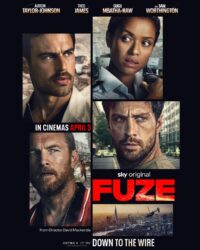
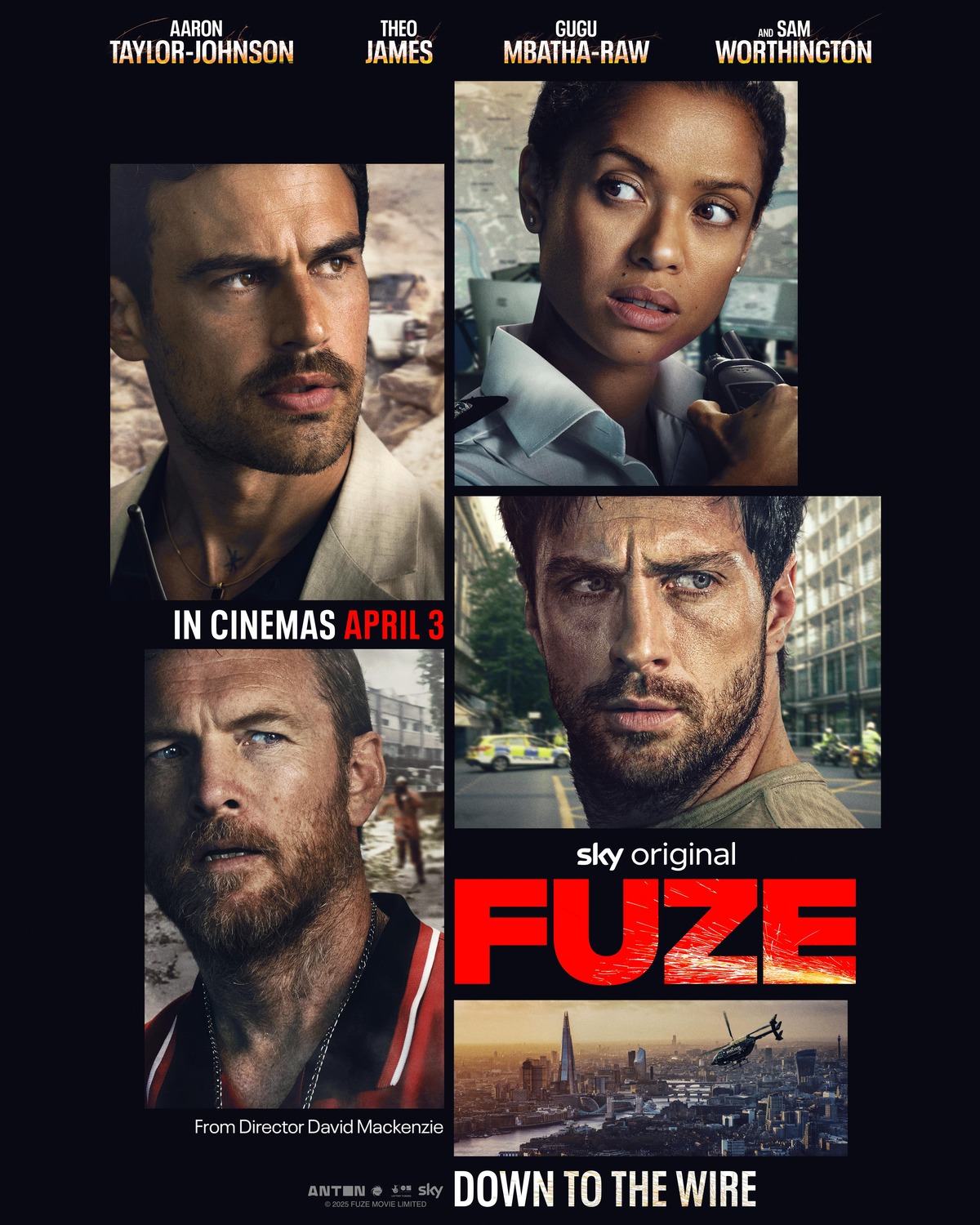
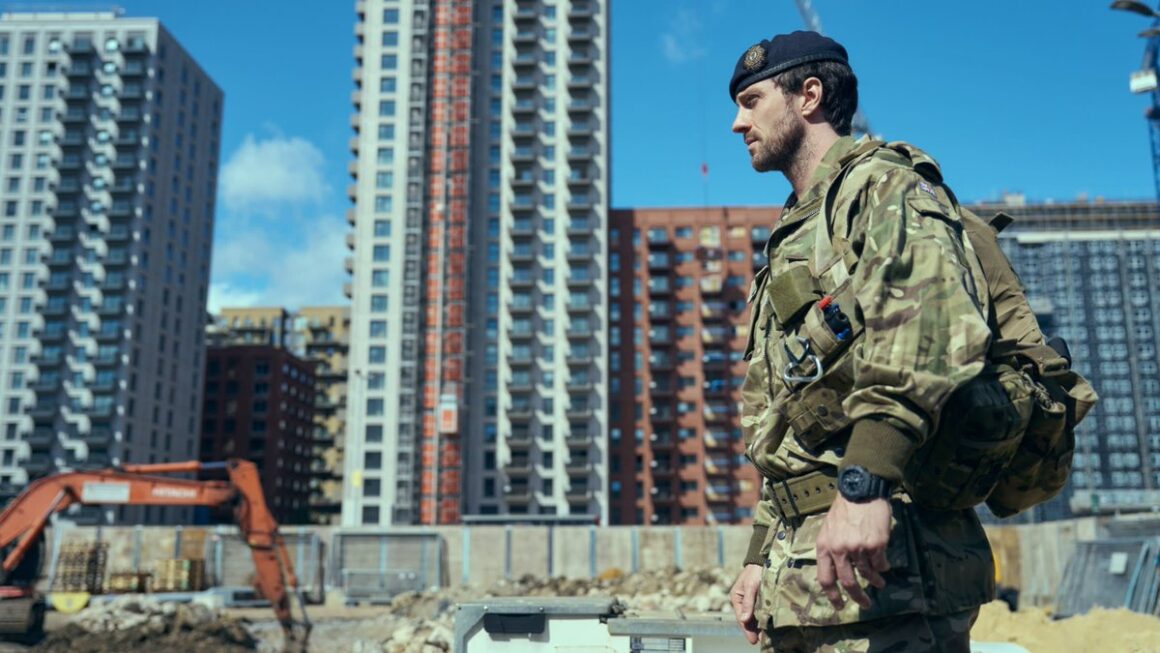
The third part in David Mackenzie’s unofficial Robin Hood trilogy2, Fuze is an entertaining but ridiculous ride. An unexploded WWII bomb is discovered in a central London building site and grizzled Afghan war veteran Aaron Taylor-Johnson is called in with his squad to make it safe. We soon learn that the bomb is a cover for an audacious diamond heist, taking advantage of the plod’s preoccupation with public safety and the ensuing multi-block evacuation.
The question is, how much does Taylor-Johnson know about the plot but it takes a tight 90 minutes and several twists before we find out. Films like this are all about the twists so you can never have too many in my book but Fuze even pushed me to my limit.
Made for the UK Sky channel, Fuze is let down by TV’s assumption that you won’t be concentrating wholeheartedly on the screen. Frustratingly long parts of it are essentially narrated via updates between Taylor-Johnson’s squad and the Metropolitan Police.
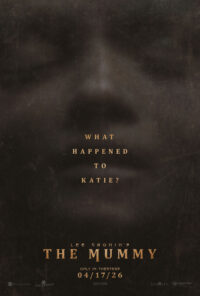
The best bit of Lee Cronin’s The Mummy is the word “sarcophagus” but the disappointment is that it’s only used twice. Irish horror-auteur Lee Cronin gets his name on the film in case we were tempted to think it was in the Fraser/Weitz or Tom Cruise Mummy universes. It’s not nearly as much fun as either of those.
Cheerful child Katie Cannon (Emily Mitchell) is kidnapped from the garden of the Cairo house her American parents are living in while dad (Jack Reynor) is a foreign correspondent and mum (Laia Costa) is a nurse. Seven years later, with the remains of the family back in New Mexico, Katie is recovered inside a mysterious and ancient sarcophagus. Turns out she hasn’t just been held hostage, she’s been inhabited by a demonic force (Natalie Grace) that – interestingly – is set on destroying happy families.
The opposite of fun, this Mummy was only interesting because New Mexico is portrayed by Ireland and Egypt by Spain and the demon by some impressive but gross practical makeup effects by Arjen Tuiten (Wolf Man).
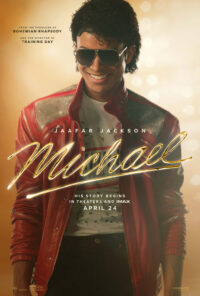
I’ve been wondering since I saw it on Saturday whether there is, in fact, any hidden subtext to Antoine Fuqua’s fantasy/biography of Michael Jackson’s first 29 years, Michael. The second shot of the film lingers on the star’s groin (after an opening shot of his feet). Maybe that’s as subtle as it gets?
Utterly inessential – indeed, dishonest – on any artistic or dramatic level, Michael is as sloppy a production as Jackson’s own shows were tight. Back in 2009, I reviewed the documentary This Is It for this very website and said:
This behind-the-scenes documentary, made up of footage intended for “Making of” extras on an eventual DVD plus handicam footage for Jackson’s own personal archive, shows a dedicated bunch of seriously talented people preparing a huge stage show for an audience of demanding fans. However, no one involved is more demanding than the star of the show MJ himself.
But Michael’s screenwriter, John Logan (Skyfall), seems to have been more focused on the paycheque than elevating his film above the level of cliché. At one point, a Motown talent executive watching the Jackson 5 from the wings, approaches the pantomime villain of the story Colman Domingo (as father/manager Joseph Jackson). She hands him a business card and says, “I’ll be in touch.” But how?! She’s given him a card and he hasn’t told her anything about how to get hold of him?
I’ll give credit where credit is due – debutant Juliano Valdi is terrific as the young Michael and I hope whoever is looking after him is aware of the real story behind Michael’s career and is there to protect him from exploitation and mistreatment. Jackson’s nephew, Jaafar, is more than creditable as the superstar but Jackson tribute acts have been ten a penny for decades and doing that right is really just baseline. Impersonating Jackson is one thing – the real achievement was inventing himself in the first place, somehow fusing James Brown, Sammy Davis, Jr., Gene Kelly and Bob Fosse and turning all that into something that electrifying.
But it’s the complexity of Jackson that’s missing. All of it. Any of it. Maybe that’s how he would have wanted things, but he – and the unfortunate young people who came into his orbit – actually deserve much more.
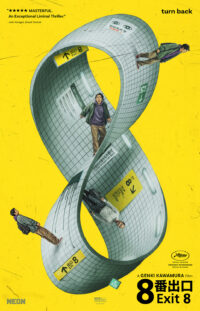
I was delighted to be commissioned by RNZ to write a review for Exit 8 for the website, mainly because those opportunities are few and far between these days. I’d like you to read the whole thing because I’m quite proud of it and, you know, the metrics matter:
On holiday in Tokyo a few years ago I saw a salaryman tumble down an escalator to the train platform at the bottom. Another man stood above him, as if he might have been responsible. Was there a dispute? Did they even know each other? The man in a heap looked up and made eye contact with me as if to say, ‘there’s nothing to see here’ and then dozens (hundreds?) of fellow commuters walked around or stepped over him on their way to the next destination of their own lives.
In the normally well-ordered world of Japanese public transport you could call the incident “an anomaly” – something that clearly happened but was paid no attention to.
Anomalies like that are the driving force of Genki Kawamura’s fascinating video game adaptation, Exit 8. A commuter on his way to a temp job exits his train at an unfamiliar station. As he heads to the exit, the same four sections of subway repeat in a loop and he learns that his only way out is to solve a puzzle that requires his close attention.
I liked Exit 8 a lot and it deserves to be seen without distractions.
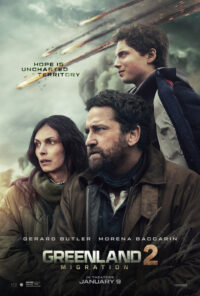
There are good/good films; there are bad/good films; there are also good/bad films and clearly there are bad/bad films. And then there is whatever the hell Greenland 2: Migration is.
The original Greenland disaster movie came out during early Covid and maybe it met the mood of the times because it even got me to change my mind about Gerard Butler, at least for a minute or two. From memory, a comet strikes the Earth, causing an electromagnetic pulse that knocks out all our technology and gruff man of the people Butler has to get his family to safety at a bunker in, you guessed it, Greenland.
In the new film, it’s five years on and fragments of the comet continue to rain down on everyone and nuclear storms make it impossible to spend any time outside without protective gear. The Greenland bunker is no longer safe but there are rumours that the initial crater somewhere in Western Europe has cosmic properties and may be able to sustain life.
So off they go again on an adventure that is far, far stupider than anything else I am likely to see this year. Not one thing about this disaster of a picture makes a lick of sense. It’s streaming on Prime which I should have guessed because whoever makes the commissioning decisions for their feature programming has clearly never seen a film – never even sat next to anyone who has seen a film – but has seen spreadsheets about films.
Further listening
I reviewed Fuze for RNZ Nights two Fridays ago and Exit 8 last Friday night. As usual, the conversation was pretty wide-ranging so you’ll find me also talking about playback singer Asha Bhosle, local indie thriller Blind Panic and Tom Hanks on Apple TV.
On Sunday I appeared on RNZ Culture 101 and provided a sneak preview of my Michael review as well as The Time Traveller’s Guide to Hamilton Gardens and ANZAC documentary Sgt. Haane. Those last two are in cinemas (officially) this week and I’ll write up my thoughts here when that happens.