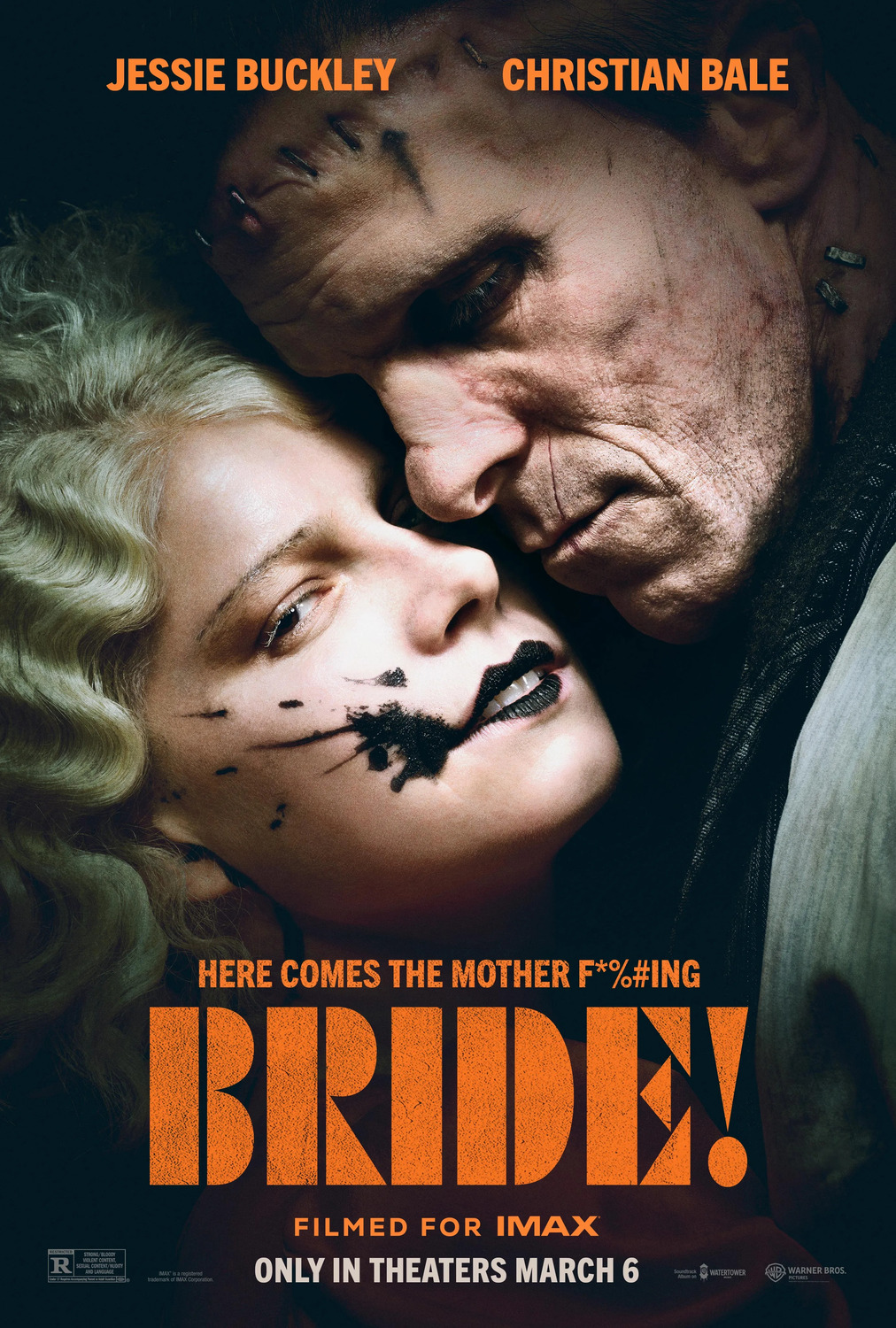
I’ve heard it said a few times that men should count themselves lucky that women only want equality and not revenge, a sentiment I was reminded of watching Maggie Gyllenhaal’s capital‑F Feminist classic The Bride! last weekend.
It comes from a generation of Wimminspace warriors that terrified me as a student but who continue to have a justifiable rage at how far society hasn’t come. A misogynist and serial sexual abuser has been elected president twice. I see there’s a prison interview today with the heinous Harvey Weinstein where he still professes to have caused no harm. The Epstein files are full of evidence of powerful men believing that paying for sex with children was a victimless crime.
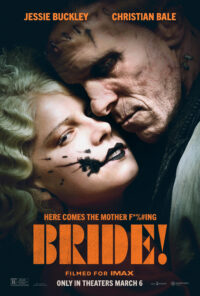
The Bride! is fuelled by this anger but it has a wacky tone – it’s a comedy first and foremost, then a romance making it … a romantic comedy? It’s a politically charged film made by a woman who is heartily sick of being told she should “smile more”. “You want laughs?” Gyllenhaal appears to be saying through gritted teeth. “How about this? And this? And THIS!”
It is crammed with stuff, and by definition uneven, but its wildness is the point. Shave off the edges and all you are left with is polite and, dare I say it, ordinary. But the times demand more than “polite” and audiences deserve better than “ordinary”.
Jessie Buckley is Ida, a gangster’s moll in 1930s Chicago. Disgusted by the men she is surrounded by and – thanks to either mental illness or supernatural forces – with the haughty voice of Frankenstein author Mary Shelley (also Buckley) braying in her head, she is thrown to her death down some speakeasy stairs. And so her story, supposedly, ends.
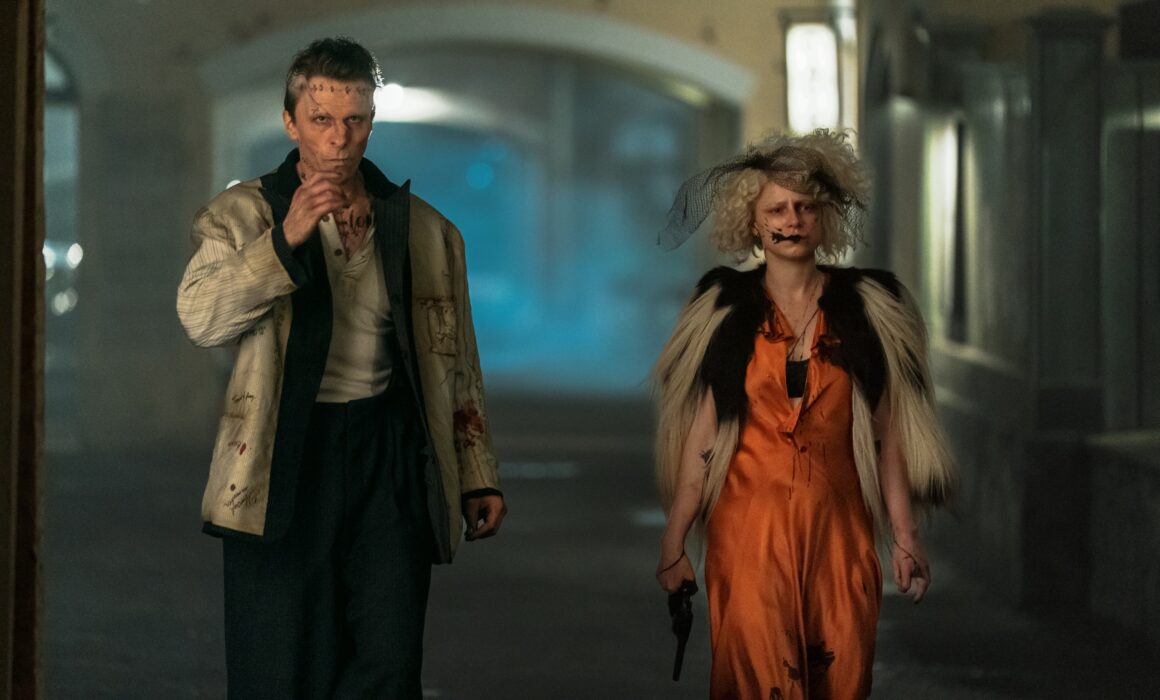
At roughly the same time, Frankenstein’s monster (known as “Frank” and played by Christian Bale with more than a little bit of Herman Munster) arrives in town to persuade mad scientist Annette Bening to “reinvigorate” him a partner. Centuries of loneliness is clearly taking its toll but there’s some male entitlement there from the beginning.
When Ida is reawakened she has no memory of her past except for her rebellious nature, allowing Frank to shape new memories and a new identity. Frank loves the movies, especially the smooth star of escapist musicals, Ronnie Reed (Jake Gyllenhaal channelling Fred Astaire), and the couple bond over popcorn before their attempt to escape to a quiet life is thwarted by the media, dirty cops and Ida’s former criminal associates.
While the Frankenstein elements pay homage to Shelley, original Bride Elsa Lanchester, even Mel Brooks, The Bride! is also a love letter to classic movies. The Astaire musicals we’ve just mentioned, but also Bonnie & Clyde and Penélope Cruz playing Barbara Stanwyck playing a secretary (wonderfully named Myrna Malloy1) with thwarted detective ambitions.
And if you add the name of Buckley’s Ida to the name of the mob boss (Zlatko Buric), you get Ida Lupino, the best-known female director in the Hollywood studio system and the first woman to direct a film noir2.
Which brings us back to the central reason for this film to be – Feminism. (Why are modern critics so afraid of using the word?)
I read some un-evidenced online comments that The Bride! had somehow been held back from release in order to not come up against a competing Frankenstein project but it seems clear to me that it was always intended to open everywhere on International Women’s Day, indeed I would be surprised if that was not a contractual obligation from the director herself3.
The men in the film are either patriarchal archetypes or patriarchal victims (or both). Peter Sarsgard’s chilled out Chicago detective knows that he has achieved his position on the back of a talent for detective work that isn’t his own. Even the mournful Frank has the potential to lash out with no warning, reminding at least half of the audience that they have to be hypervigilant – even around the men they love.
(One of the most sensitive observations in the film is that Frank is able to move relatively freely through the fringes of society because his scars resemble those of many who went to WWI – his escape into the magic of the movies would also have been far from unique.)
I’ve already gone on far longer than usual so I won’t repeat the praise for the craft (Sandy Powell’s costumes!) that others have made. I’ll just ask potential viewers to sit back and enjoy something weird at a time when The Bride!‘s studio Warner Bros. – with their fabled history of support for cinema’s iconoclasts – is in danger of being submerged under a mountain of corporate debt and its new owner’s own political agenda. It’s an agenda that is unlikely to match Ms. Gyllenhaal’s.

I spoke about Óliver Laxe’s Sirāt with Emile Donovan on Friday night.
I won’t repeat myself here as I’ve already gone on far too long, but I will say that it’s an admirable film but not an enjoyable one.
Man travels to Morocco with his son to look for his missing daughter among the desert rave scene, coattails some fringe-dwellers who are heading even further off the beaten track and things go from bad to worse. Meanwhile, in the distance, the world might be coming to an end.
One thing I didn’t mention on air is that I was supposed to watch this weeks ago but instead didn’t get around to it until after Trump had started bombing Iran. That subtext hit me much harder watching it now than it would have then which is one of the weird things about this job. Timing matters but you don’t control it.

Also landing in cinemas last weekend was another returning title from the 2025 Intrepid4 French Film Festival:
The programme launch film Les règles de l’art has the terrible English title, The French Job to kindle memories of Michael Caine’s 60s heist film The Italian Job, a comparison that does neither film any favours. Based on an unlikely true story, it’s about a burglary at the Paris Museum of Modern Art and the attempts by the thieves to successfully fence some of the most famous paintings in the world. Actually, nobody knows for sure what happened to them and Dominique Baumard’s film is a fanciful and entertaining imagining of the whole affair.
Melvil Poupaud plays a mild-mannered insurance assessor and watch valuer drawn into the orbit of conman Sofiane Zermani and burglar Steve Tientcheu. The “law-abiding” one of the trio being played by a white actor while the genuine criminals are of Algerian and Camerounian backgrounds felt like a tone-deaf choice to me, but the performances by all three got me past it.
Also featured in that May 2025 preview: Frank Dubosc’s Un ours dans le jura – the literal translation is A Bear in the Jura which is more useful than the title the local distributors chose, How to Make a Killing, which has now been rendered almost un-Googleable by Glen Powell – and the Ravel biopic, Bolero.