Speaking as someone whose taste for adventure doesn’t stretch much further than going to the dairy in the rain, the reckless self-endangerment represented by Joachim Rønning and Espen Sandberg’s Kon-Tiki was a genuine eye-opener. The bones of the story are well-known enough to anyone who built balsa models of Heyerdahl’s raft at primary school in the 1970s but bear repeating here.
While researching native Tahitians in the late 1940s, Norwegian ethno-explorer Thor Heyerdahl posited a theory that the islands of Polynesia had originally been settled by sailors from South America (actually, bearing in mind the technology of the time they would have been more like the drifters from South America, but hey). Unable to persuade anyone in the scientific community, he was forced to experiment on himself. He went to Peru, built a raft, crewed it with other northern European adventurers and set off to find Polynesia.
With little or no experience, training or even aptitude, it was a giant leap of faith — Thor’s faith. Unable to steer, threatened by sharks and — for most of the time — without radio contact, it was a completely potty idea but an idea that transformed our knowledge of human development and changed history.
If you know who I’m talking about, I have now ruined Kon-Tiki for you. Sorry.
In Rønning and Sandberg’s film, Heyerdahl comes across as an obsessive and extremely difficult man, but the way they portray the adventure it becomes clear that there was really no other way. Heyerdahl’s faith wasn’t a million miles away from the totally blind faith of the first explorers who set out from Peru all those centuries ago. That obsession is also shared by the filmmakers who insisted on using a replica ocean-going raft (incidentally named Tangaroa) built by Heyerdahl’s grandson, and then chose to shoot on the open sea rather than in a tank.
[click to continue…]
The 2009 Star Trek reboot went into production on the eve of the writers’ strike and therefore had no right to be as entertaining — or to make as much sense — as it did. In fact, it was so successful that it has become the gold standard of dormant franchise resuscitation and I’m hoping that the lessons — what to honour, what to ignore, the mix of knowing humour and state-of-the-art action — are taken on board by the forthcoming Superman blockbuster Man of Steel.
A re-watch of Star Trek on Wednesday night confirmed my thoughts from the original review. It worked so well, on so many levels, that by the end I was eagerly anticipating my Friday night reunion with Christopher Pine’s Kirk, Zachary Quinto’s Hot Spock, etc. So, it is with a heavy heart then, that I have to report feeling let down by Star Trek Into Darkness. Everything seems a lot more self-conscious than before, as if the filmmakers have just realised that there are a squillion people watching and they’d better not make a mess of things. Which usually means that’s exactly what happens.
Not long after the Federation has been saved in the first film, our heroes are out exploring the galaxy, getting into trouble. As punishment for violating the Prime Directive (and incomplete paperwork), Kirk is relived of the Enterprise command but before he has time to properly lick his wounds, a terrorist bombs Starfleet’s London office and threatens to kick off an intergalactic (intra-galactic?) war with the Klingons.
dying is easy — comedy is hard
It’s the execution that disappoints this time around. The humour feels a bit heavy-handed, the attempts to incorporate beloved elements from the Original Series are clunky and the action is repetitive — there are several last second rescues, for example, and at least two of them involve actual on-screen countdowns. I can’t say more for fear of spoilers but — suffice to say —
Star Trek Into Darkness is only a B minus while its predecessor merited an A.
[click to continue…]
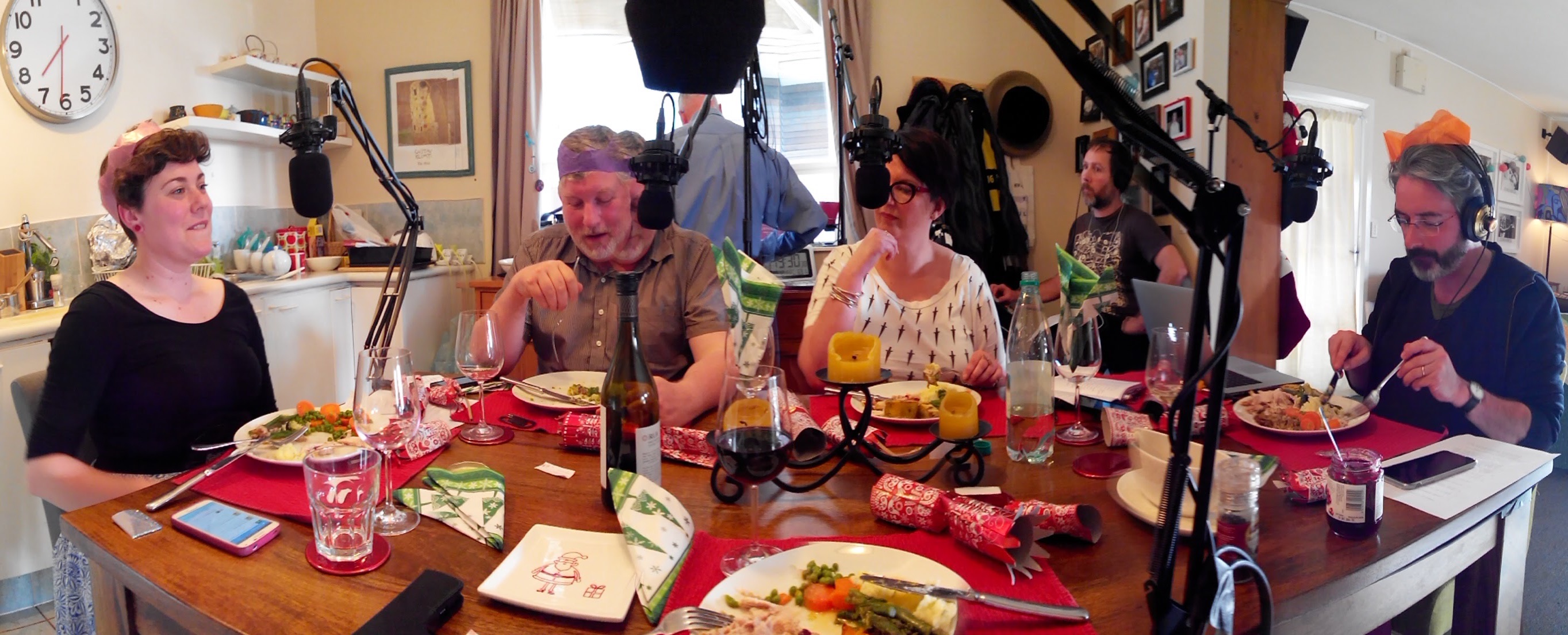
Robert Redford is back in the world of political thrillers in The Company You Keep, Beth Brash from eatandgreet.co.nz helps review Haute Cuisine and Dan interviews Pietra Brettkelly, director of the New Zealand doco Maori Boy Genius.
Check out this episode
It’s easy to laugh at ageing movie stars. Crumbs, when they make films like The Expendables they actively encourage us to make jokes about creaking joints and dicky hips. But let us pause for a moment and salute the longevity of one of the greatest movie stars there ever was, someone who was headlining box office smash hits when Arnold was still just pumping iron and Bruce was still at High School.
Robert Redford — the “Sundance Kid” — is 76 years old and in his new film, The Company You Keep, he does quite a bit of running around even though you can see he has the slightly uncertain gait of someone whose balance isn’t what it was. He rations out that million dollar smile pretty carefully too, as this is another of his serious politically-aware dramas — couched in the form of a thriller.
[click to continue…]